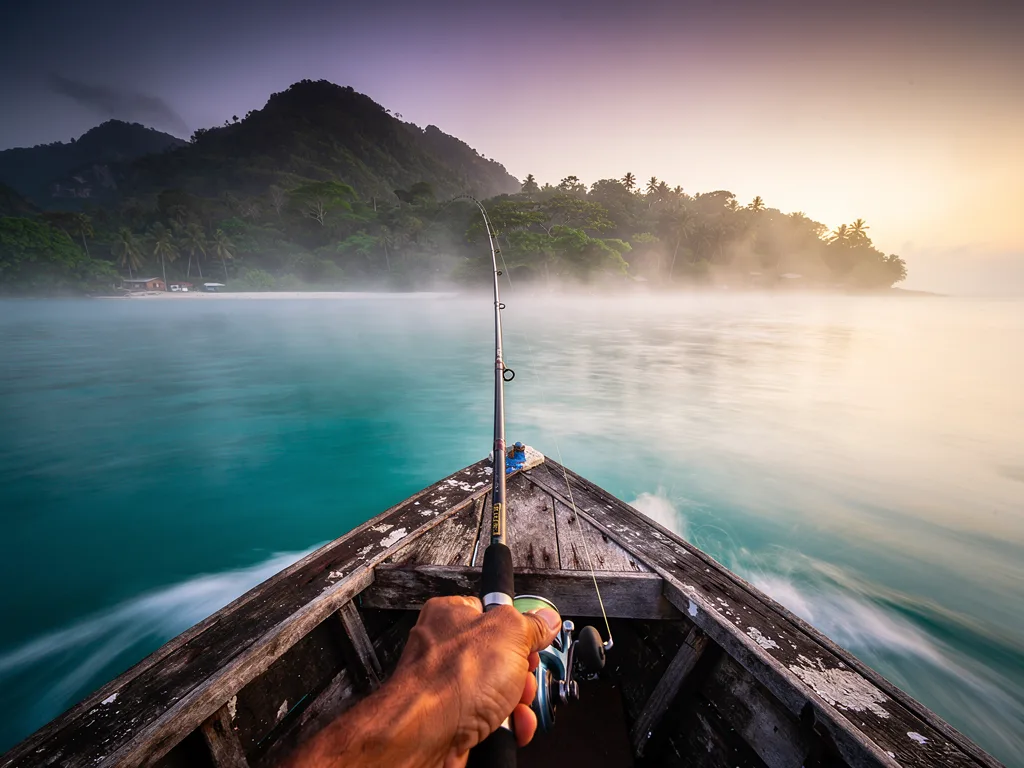
Imagine casting a line into the deep, turquoise waters of the Caribbean, where the rugged mountains of Hispaniola meet pristine coral reefs. Fishing in Haiti offers an adventure far removed from the crowded tourist decks of other islands—a raw, authentic, and challenging experience for the intrepid angler. This guide provides everything you need to know about planning a fishing trip to Haiti, from the surprising simplicity of its regulations to the breathtaking spots waiting to be explored, all while navigating the very real complexities of travel in this unique nation.
01🎣 Fishing License & Permits: A Simple Start
For anglers accustomed to complex licensing systems, Haiti presents a refreshingly straightforward scenario: you do not need a fishing license for recreational fishing.
There is no formal permit system for tourists or locals engaging in recreational angling, whether from the shore, a pier, or a private boat. This applies to both Haitian nationals and international visitors. While commercial fishing operations require permits from the Ministry of Agriculture, Rural Development, and Natural Resources (MARNDR), recreational activities are unregulated in this regard.
Tip: The absence of a license doesn't mean an absence of responsibility. With minimal enforcement, the onus is on you, the angler, to practice ethical and sustainable fishing to help preserve Haiti's marine resources.
02💰 Understanding the Costs: A Budget-Friendly Frontier
Haiti is one of the most affordable fishing destinations in the Caribbean, but its costs are structured differently. Forget package charter prices; here, you pay for the essential element: the local knowledge and boat of an artisanal fisherman.
Guided Fishing & Charter Costs
| Experience Type | Estimated Cost (USD) | Estimated Cost (EUR) | Notes |
| :--- | :--- | :--- | :--- |
| Full-day with local fisherman | $20 - $50 | €18 - €46 | Price per boat, not per person. Negotiate directly. |
| Half-day trip | $15 - $30 | €14 - €28 | Common for near-shore reef fishing. |
| "Charter" boat (limited) | $150 - $300+ | €140 - €280+ | Rare, often older boats. Safety equipment not guaranteed. |
| Daily fishing budget | $30 - $60 | €28 - €55 | Covers guide, food, water, and local transport. |
Crucial Equipment Note: There are no local fishing tackle shops or rental services for tourists. You must bring 100% of your own equipment, from rods and reels to lines, lures, and terminal tackle. This is non-negotiable.
Additional Travel Costs
* Visa on Arrival: $10 USD (€9) for most nationalities.
* Internal Transport: Unreliable and potentially expensive due to poor road conditions. Hiring a reliable driver with a 4x4 is recommended.
* Accommodation: Ranges from $15 USD (€14) for a basic guesthouse to $100+ USD (€93+) for secured hotels in Port-au-Prince.
03📜 Rules, Regulations & The Reality of Enforcement
Haiti's fishing regulations exist primarily on paper. The 1978 fishing decree outlines rules, but institutional weakness means enforcement is virtually non-existent.
* Formal Closed Seasons: None established.
* Catch Limits: No formal limits in place.
* Minimum Size Requirements: Not enforced.
* Prohibited Methods: Dynamite fishing is technically illegal but remains a common and destructive practice in some areas.
The Angler's Ethical Imperative
Given this regulatory vacuum, sustainable fishing becomes a personal commitment. We strongly encourage:
* Practicing catch-and-release for billfish and other large, breeding-stock predators.
* Avoiding known overfished species where possible.
* Only taking what you will personally consume.
* Never supporting or participating in destructive fishing methods.
🎣 Fishing tours in Haiti — Connect with local guides for an authentic experience.
04🗺️ Top Fishing Spots in Haiti: Where Adventure Awaits
Haiti's coastline is a tapestry of deep drop-offs, vibrant reefs, and mangrove lagoons. Here are the prime locations for your angling adventure.
1. Île-à-Vache: The Tranquil Island Haven
This small, protected island off the southern coast near Les Cayes is arguably the safest and most scenically rewarding fishing destination in Haiti. The surrounding waters are calmer, and the reef systems are healthy.
* Target Species: Snapper (mutton, yellowtail), Grouper (black, red), Barracuda, Jacks, and occasional Tarpon in the mangroves.
* The Experience: Picture yourself on a traditional wooden *kayouk* (a local canoe), the sun warming your back as you bottom-fish over coral heads. The water is crystalline, and the backdrop is one of green hills dotted with palm trees. It's a world away from the mainland's troubles.
* Best Technique: Bottom fishing with bait, light trolling with deep-diving plugs along the reef edges.
2. Les Cayes & the Southern Deep: The Big Game Ground
The waters south of Les Cayes (Aux Cayes) plunge rapidly into the deep waters of the Caribbean Basin, creating a highway for pelagic species.
* Target Species: Blue Marlin (peak season April-July), Wahoo, Mahi-Mahi (Dolphinfish), and Yellowfin Tuna.
* The Experience: This is where Haiti's fishing potential truly shines. Trolling these deep blues offers a shot at a trophy fish in completely uncrowded waters. You might not see another boat all day.
* Best Technique: High-speed trolling for Wahoo, rigged ballyhoo or skirted lures for Marlin and Mahi.
3. The Gonâve Canal: The Pelagic Superhighway
The deep channel between the mainland and the large Île de la Gonâve is a legendary, if challenging, fishing ground. Strong currents funnel baitfish, attracting large predators.
* Target Species: Blue Marlin, White Marlin, Sailfish, large Wahoo, and Mahi-Mahi.
* The Experience: This is advanced, expedition-style fishing. The seas can be rough, and you are far from help. The reward is world-class billfishing in one of the last untouched arenas in the Caribbean.
* Best Technique: Heavy-tackle trolling with dredges and large lures. This area is best accessed by the rare, more substantial charter boat from Port-au-Prince.
4. Cap-Haïtien & the North Coast: The Reef & Ruin Route
Fishing near the historic city of Cap-Haïtien offers a blend of good angling and cultural immersion, with the imposing Citadelle Laferrière watching from the mountains above.
* Target Species: Snapper, Grouper, Triggerfish, Barracuda, and Tarpon (the "Silver King") found in river mouths and estuaries.
* The Experience: Combining a fishing trip with a visit to the UNESCO-listed historic sites is unique. The reefs here are less pressured than in more developed Caribbean nations.
* Best Technique: Live bait fishing (small jacks or pinfish) for trophy Tarpon, bottom fishing over reef structures.
5. Jacmel: The Southern Shoreline Charm
The area around the artistic town of Jacmel on the southern coast provides accessible shore-based and near-shore fishing.
* Target Species: A mix of reef species, small jacks, and snapper.
* The Experience: Ideal for the angler-traveler who wants to combine a few hours of fishing with exploring Jacmel's famous waterfalls, papier-mâché crafts, and vibrant Carnival culture.
* Best Technique: Spinning from rocky headlands or the pier, or hiring a local for a short trip to nearby reefs.
🚤 Charter fishing in Haiti — Find local boat captains for your fishing adventure.
05🚤 Fishing Tours & Guided Experiences: The Local Way
Haiti lacks a formal, professional charter industry. Your "guide" will be an experienced local fisherman, and your "charter" will be his seaworthy, if basic, wooden boat.
How to Arrange a Trip
1. Through Your Accommodation: This is the safest method. Reputable guesthouses in Île-à-Vache, Jacmel, or Cap-Haïtien can connect you with trusted fishermen.
2. Direct Negotiation: In fishing villages, you can negotiate directly at the shore. Always agree on price, duration, and what's included (fuel, catch sharing) before departing.
3. Via a Tour Operator: Some adventure tour operators based in Port-au-Prince can arrange multi-day fishing-focused trips with vetted local partners.
What to Expect & Safety Checklist
* Boats: Typically 6-8 meter (20-25 ft) open wooden boats with outboard motors.
* Safety: Assume there is no safety equipment. You must verify and potentially provide your own life jackets, a means of communication (satellite messenger like Garmin inReach is highly recommended), and a first-aid kit.
* What's Included: Usually just the boat, captain, and fuel. You bring all tackle, food, water, and sunscreen.
* Catch: The fisherman will likely expect to keep a portion or all of the catch for his family or to sell. Clarify this beforehand.
06🧳 Practical Travel Information for the International Angler
Best Time to Visit
* Peak Fishing & Dry Season: November to March. This period offers the most stable weather, calmer seas, and lower rainfall.
* Hurricane Season: June to November. This period carries significant risk, especially from August to October. Travel is not advised.
* Billfish Season: For Blue Marlin, plan your trip between April and July.
Getting There & Visa
* Main Airport: Toussaint Louverture International Airport (PAP) in Port-au-Prince.
* Visa: Most nationalities (US, EU, UK, Canada, Japan) can obtain a visa on arrival for a fee of $10 USD (€9). Ensure your passport has at least six months' validity.
* Internal Flights: UNHAS and other small airlines may operate sporadic domestic flights to Cap-Haïtien or Les Cayes, but schedules are unreliable.
Essential Gear & Packing List
This is the most critical planning element. Bring duplicates of essential items.
* Rods/Reels: Medium-heavy spinning setups and a sturdy conventional trolling outfit.
* Tackle: An ample supply of hooks, weights, leaders (heavy fluorocarbon for reefs), and a variety of lures (jigs, popers, diving plugs).
* Tools: Pliers, line cutters, de-hooking tools, fillet knife.
* Personal: High-SPF sunscreen, polarized sunglasses, a wide-brimmed hat, and a comprehensive medical kit.
Language, Communication & Safety
* Languages: French and Haitian Creole are official. English is not widely spoken. Learn basic Creole phrases: "*Bonjou*" (Good morning), "*Mèsi*" (Thank you), "*Konbyen?*" (How much?).
* Communication: Purchase a local Digicel SIM card for calls within Haiti. For offshore safety, a satellite communication device is essential.
* SAFETY ADVISORY: Haiti faces severe challenges, including gang violence, kidnappings, and political instability. Travel advisories from most Western governments (US, UK, Canada) advise against all travel or against non-essential travel. If you proceed, you must:
* Travel with a knowledgeable local guide at all times.
* Avoid displaying expensive equipment.
* Register with your embassy.
* Have robust contingency and evacuation plans.
🏨 Accommodation near fishing spots in Haiti — Find secure places to stay.
07🐟 Fish Species & Local Techniques
Target Species Guide
* Blue Marlin: The ultimate prize. Best targeted by trolling large lures or rigged baits in deep water off Les Cayes or in the Gonâve Canal.
* Wahoo: Incredibly fast and toothy. Best caught by high-speed trolling with jet heads or rigged ballyhoo.
* Mahi-Mahi: Found around floating debris and weed lines. Aggressive strikers on trolled lures or live bait.
* Snapper & Grouper: The bread and butter of reef fishing. Use cut bait, squid, or live fish on bottom rigs.
* Tarpon: Found in river mouths and estuaries. Target with live bait (mullet, crabs) or large streamers on a fly rod.
Local Delicacies
Fishing is deeply intertwined with Haitian cuisine. Don't miss:
* Pwason Fri (Fried Fish): Whole snapper or grouper, seasoned and fried crispy, often served with *pikliz* (spicy pickled vegetables).
* Lambi (Conch): A beloved seafood, often stewed in a rich, spicy Creole sauce.
* Langouste (Spiny Lobster): A seasonal delicacy, often grilled or in creamy sauces.
🛒 Fishing equipment for Haiti — Essential saltwater gear for your trip.
08⚖️ Legal & Conservation Notes
For the Foreign Angler
* There are no restrictions on foreigners bringing personal fishing gear into the country.
* There are no formal export restrictions on fish you catch, but check with your airline about transporting cleaned fish or trophies (like bills). It's often best to release trophy fish.
* Always fish with respect for local communities and their resources.
The Bigger Picture: Challenges in Haitian Fisheries
Haiti's marine environment is under immense pressure. Understanding this context is part of being an informed visitor.
* Overfishing: Many nearshore fish stocks are severely depleted due to poverty and a lack of alternative livelihoods.
* Habitat Destruction: Mangroves are cleared for charcoal, and coral reefs suffer from sedimentation and pollution.
* Destructive Practices: Dynamite and poison fishing, though illegal, occur and cause devastating, long-term damage.
By practicing and promoting sustainable catch-and-release fishing, you contribute, in a small way, to demonstrating the long-term value of healthy marine ecosystems.
09Frequently Asked Questions (FAQ)
1. Is it really safe to go fishing in Haiti right now?
Safety is the paramount concern. Most governments advise against travel due to extreme gang violence and instability. Fishing trips are only conceivable with a trusted, vetted local guide, in specific areas like Île-à-Vache, and with comprehensive security arrangements. It is not a destination for casual tourism.
2. Can I book a fishing charter online before I go?
Very rarely. The industry is almost entirely informal. You may find a few operators on platforms like FishingBooker, but the standard method is arranging trips through your accommodation once you are in-country.
3. What if I forget some fishing gear? Can I buy it in Haiti?
No. There are essentially no tackle shops catering to recreational anglers. You must bring everything you need from your home country. Consider bringing extras to gift to your local guide.
4. Do I need any special vaccinations?
Ensure your routine vaccinations are up to date. Hepatitis A and Typhoid are recommended due to risks from contaminated food/water. Malaria prophylaxis is also recommended. Consult a travel medicine clinic 4-6 weeks before your trip.
5. What is the currency, and can I use USD?
The currency is the Haitian Gourde (HTG). US Dollars are widely accepted, especially for larger transactions like guide fees. However, carry small USD bills and expect change in local currency. Credit card usage is extremely limited outside high-end hotels.
6. What is the best all-around fishing spot for a first-time visitor?
For a balance of safety, scenery, and fishing opportunities, Île-à-Vache is the top recommendation. It's relatively secure, has the most tourism infrastructure (however basic), and offers excellent reef fishing.
7. Are there any marine protected areas I should know about?
The government agency ANAP oversees protected areas, but enforcement is minimal. The most notable is the Parc National Historique near Cap-Haïtien, which includes coastal areas. Ask your local guide about any sensitive zones.
10Conclusion: An Unforgettable Challenge
Fishing in Haiti is not for everyone. It is a destination that demands resilience, thorough preparation, and a willingness to step far outside the conventional tourist trail. The rewards, however, are unique: uncrowded waters, stunning natural beauty, the thrill of untapped fishing grounds, and a deep, authentic connection with local fishermen who are the true stewards of the sea. If you have the experience and the determination to navigate its complexities, Haiti offers an angling adventure that is truly unforgettable.
Plan carefully, prioritize safety, and respect the environment and its people.
11Sources & Further Links
Disclaimer: The information in this guide is provided for educational and planning purposes as of March 2026. Haiti's political, security, and environmental situation is exceptionally volatile and can change rapidly. Fishing regulations, where they exist, are often unenforced. Travel to Haiti involves significant personal risk. You are solely responsible for verifying current travel advisories from your government, conducting thorough due diligence, and making informed safety decisions. Fishing World Guide does not recommend travel to Haiti for most individuals at this time. Always prioritize personal safety and practice sustainable, ethical fishing.
Don't miss any fishing tips!
Get the best fishing destination recommendations weekly in your inbox.
No spam. Unsubscribe anytime.
Data incorrect?
Help us keep this article up to date — report outdated or incorrect information
More articles