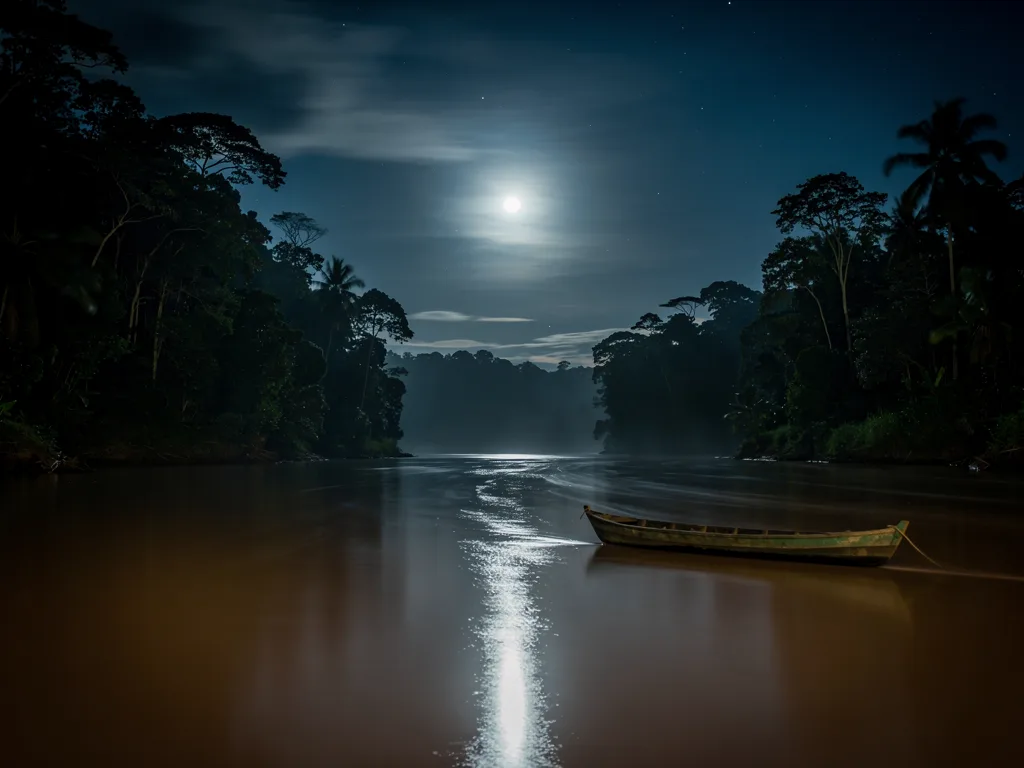
Imagine standing on the bow of a dugout canoe at dawn, the mirror-calm blackwater river reflecting a blood-red sky, while a 150 kg (330 lb) Arapaima — often called the “living dinosaur” — surfaces with a loud gulp just 10 metres away. You have seconds to place a perfectly aimed fly or bait before the giant vanishes back into the tannin-stained depths. This is not a fantasy — this is fishing in Guyana, one of the most pristine and adventurous freshwater fishing destinations on Earth.
Guyana, the only English-speaking country in South America, remains a true wilderness. More than 80 % of its territory is covered by untouched Amazonian rainforest, and the country holds an astonishing 15 % of the planet’s total freshwater resources. From the legendary Rewa River and Rupununi region in the south to the massive Essequibo and the brackish estuaries near the Atlantic coast, Guyana delivers an unforgettable experience for international anglers who crave remote, trophy-sized fish in a setting few travellers ever reach.
Whether you dream of sight-fishing for enormous Arapaima on fly, battling explosive Peacock Bass (Lukanani) on topwater lures, or wrestling giant catfish (Lau Lau) that can exceed 150 kg (330 lb), fishing in Guyana is an expedition into one of the last true angling frontiers. In this comprehensive 2026 guide you will find everything you need to plan your trip: do you need a fishing license in Guyana, how to obtain the necessary permits, the best fishing spots, target species and techniques, costs in Guyanese Dollars (GYD), Euros and US Dollars, guided tours and charters, practical travel information for visitors from Europe, the USA, UK, Japan and beyond, and much more.
01Do You Need a Fishing License in Guyana?
The short answer for most international sport anglers is that you do not need to purchase a standard recreational fishing license yourself. Guyana’s licensing system, administered by the Fisheries Department of the Ministry of Agriculture, focuses primarily on commercial and artisanal fishing. Sport fishing, especially in the interior, operates under a different framework built around special permits, community permissions and strict conservation rules.
Arapaima Permits and Protected Species
The Arapaima (*Arapaima gigas*) is strictly protected. Harvesting or killing these fish is illegal. However, the government has created a legal framework that allows catch-and-release sport fishing in designated community-managed zones, particularly in the North Rupununi region. These exemptions are granted only to licensed operators working with local indigenous communities (Macushi and Wapishana villages).
Independent travellers who wish to fish for Arapaima must obtain a special permit from the Fisheries Department in Georgetown. In practice, virtually all serious anglers (99 %) travel with established operators such as Rewa Eco-Lodge, Karanambu Lodge or specialist outfitters who secure all necessary permits, “toshao” (village chief) permissions, and community levies on your behalf. Attempting to organise this independently is extremely difficult, time-consuming and often impossible due to the remoteness and indigenous land titles.
Coastal and Brackish Water Fishing
Casual hand-line or light-tackle fishing from shore in public canals, the Demerara River estuary or coastal areas generally requires no formal license for visitors. However, local customs and unwritten rules still apply. For safety, environmental compliance and the best experience, even saltwater fishing in Guyana is strongly recommended through a local guide or charter.
Tip: Always book through a reputable operator. Not only do they handle all paperwork, but they also ensure your trip supports indigenous communities and follows sustainable catch-and-release practices that help conserve these unique fisheries for future generations.
Regulations can change, particularly regarding protected species and community-managed zones. The information in this article is based on official sources available in 2026; always verify the latest rules directly with the Fisheries Department or your chosen lodge before departure.
02Costs of Fishing in Guyana
Fishing in Guyana is an expedition-style adventure rather than a casual weekend trip. Because of extreme remoteness, small-aircraft access, indigenous guide services and conservation fees, costs are higher than in more developed destinations.
Typical Price Ranges (2026 estimates)
| Experience Type | Duration | Price per Person (USD) | Price per Person (EUR) | Notes |
|----------------------------------|--------------|------------------------|------------------------|-------|
| Rewa Eco-Lodge Arapaima Package | 7 nights | $4,200 – $5,800 | €3,900 – €5,400 | Includes internal flights, guides, meals, permits |
| Karanambu or Rupununi Lodge | 6–8 nights | $3,800 – $5,200 | €3,500 – €4,800 | Focus on Peacock Bass & Arapaima |
| Deep Jungle Camping Expedition | 10–14 days | $5,500 – $8,500 | €5,100 – €7,900 | True wilderness, multiple rivers |
| Georgetown-based Saltwater Charter | 1 day | $650 – $950 | €600 – €880 | Deep-sea or estuary fishing |
| 14-day Custom Outfitters Trip | 14 days | $7,000 – $12,000 | €6,500 – €11,100 | Aardvark McLeod / Yellow Dog style |
Daily rate at full-service eco-lodges typically runs between €500 and €900 (approx. $540–$970) per person, covering accommodation, all meals, expert indigenous guides, boats, fuel, internal charter flights from Georgetown and all fishing permits.
Currency note: 1 EUR ≈ 225 GYD and 1 USD ≈ 208 GYD (rates fluctuate). Almost all interior lodges and operators quote and prefer payment in US Dollars. Credit cards are rarely accepted in the jungle; bring sufficient USD in cash for tips and any extras.
Compared to familiar benchmarks, a week-long Arapaima fishing package in Guyana costs roughly the same as a high-end ski week in the Swiss Alps or a luxury safari in Botswana — an investment, but one that delivers a once-in-a-lifetime wilderness fishing experience.
Tip: Book at least 10–12 months in advance for peak dry season (September–April). Many lodges have very limited rooms (Rewa has only 8–10 guest capacity) and fill quickly with repeat international clients.
03Rules & Regulations for Fishing in Guyana
Guyana enforces strict conservation measures, particularly for iconic species.
Exporting fish (even for personal consumption) is heavily restricted and requires additional permits from the Fisheries Department — an effort that is rarely worthwhile for sport anglers practising catch-and-release.
04Best Fishing Spots & Experiences in Guyana
The heart of any trip to Guyana is the fishing itself. Here are the premier destinations that make anglers dream of this remote South American nation.
1. Rewa River & North Rupununi — The World Capital of Arapaima Fly Fishing
The Rewa River, a blackwater tributary of the Rupununi, is widely regarded as the single best location on the planet for sight-fishing giant Arapaima on fly. The water is gin-clear in the dry season, allowing you to watch these prehistoric fish breathe at the surface before presenting a large streamer. Fish between 50 kg and 150 kg (110–330 lb) are regularly sighted and hooked.
The experience is unforgettable: howler monkeys roaring at dawn, giant otters playing nearby, and the explosive take of an Arapaima that can strip 100 metres of line in seconds. Rewa Eco-Lodge, owned and operated by the local indigenous community, is the flagship base here. Guests paddle traditional dugout canoes or use small motorised boats with expert Macushi guides who read the water like a book.
2. Rupununi River System — Peacock Bass Paradise
Further south and west, the broader Rupununi watershed offers outstanding fishing for Peacock Bass (known locally as Lukanani). These fish are incredibly aggressive and frequently explode on topwater poppers and walk-the-dog lures in the early morning and late afternoon. The scenery — endless savannah meeting dense jungle, with distant Kanuku Mountains on the horizon — is breathtaking.
Many visitors combine Arapaima and Peacock Bass fishing in a single trip, moving between different camps and river systems.
3. Upper Essequibo River — River Monsters
For those seeking giant catfish, the deep pools of the Upper Essequibo are legendary. Lau Lau (Brachyplatystoma filamentosum) exceeding 150 kg (330 lb) have been landed on heavy baitcasting or conventional tackle using cut piranha as bait. The fishing is raw and powerful — exactly what many international anglers crave after years of more “civilised” fisheries.
4. Burro Burro River & Iwokrama Forest
This narrow, pristine jungle river inside the Iwokrama International Centre for Rainforest Conservation offers superb fishing for Peacock Bass, Arowana, Wolf Fish (Haimara) and Red Pacu. The experience of paddling through tunnels of overhanging vegetation while casting to structure is pure jungle magic.
5. Demerara River Estuary & Atlantic Coast — Saltwater Options
Anglers based in or near Georgetown can enjoy deep-sea fishing or estuarine action for Tarpon, Snook, Jack Crevalle, Kingfish and various shark species. While less famous than the freshwater experiences, these trips provide an accessible alternative or a perfect add-on at the beginning or end of an interior expedition.
The combination of extraordinary fish, pristine wilderness, and the thrill of true exploration makes fishing in Guyana an experience that stays with you for a lifetime.
🎣 Fishing tours in Guyana — Book guided fishing tours with local experts.
05Tours & Guided Experiences
Because of the logistical complexity and the necessity of working with indigenous communities, almost every successful fishing trip in Guyana is fully guided.
Top Operators and Lodges (2026):
Most packages include:
Guided trips are not cheap, but they deliver safety, sustainability and success rates that independent travel simply cannot match in such remote terrain.
🚤 Charter fishing in Guyana — Find and book charter boats with experienced captains.
06Fish Species, Techniques & Equipment
Arapaima — Sight fishing is the classic method. When a fish rolls, you have only seconds to cast a 5–8 inch (12–20 cm) streamer or large bait precisely in its path. 12- or 13-weight fly rods with floating or intermediate lines are standard. Heavy baitcasting setups (80–100 lb braid) are also effective.
Peacock Bass (Lukanani) — Aggressive topwater action. Use large poppers, prop baits or walk-the-dog lures on 7–8 weight fly rods or medium-heavy casting gear. The strike is spectacular.
Payara (Vampire Fish) — Inhabit fast water below rapids and falls. Require wire leaders (their fangs can cut 100 lb mono instantly) and heavy sinking lines or deep-diving lures.
Giant Catfish (Lau Lau) — Bottom fishing with heavy conventional tackle, large circle hooks and cut bait (often freshly caught piranha).
Other species — Wolf Fish (Haimara), Red Pacu, Arowana, Snook, Tarpon and various cichlids.
Equipment advice: Bring everything you need. High-quality rods, reels, lines and flies are not available for rent in Guyana. Pack at least two rods per angler as backups. A good rain jacket, quick-dry clothing, sturdy boots, headlamp, plenty of insect repellent and a high-SPF sunscreen are essential. Local guides can advise on specific fly patterns that are working during your week.
🛒 Fishing equipment for Guyana — Find the right gear for your trip.
07Practical Travel Information for International Visitors
Best time to visit: The dry season from September to April offers the best fishing conditions. Water levels are lower, rivers are clearer, and fish are more concentrated. European and North American visitors usually find December–March ideal. From the Southern Hemisphere (Australia, New Zealand, South Africa), the same window (which is their summer) works perfectly.
Getting to Guyana: Fly into Cheddi Jagan International Airport (GEO) near Georgetown. Direct flights are available from Miami, New York, Toronto, London (via connections), and several Caribbean hubs. Most fishing packages then include a short domestic flight from Ogle Airport (OGL) to the interior savannah airstrips.
Visa requirements: Citizens of the EU, USA, UK, Canada, Japan, Australia and most Caribbean nations do not require a visa for stays up to 90 days. Always check the latest requirements on the Guyana Tourism Authority website or with your embassy, as rules can change. A valid passport (minimum 6 months validity) is essential.
Health: Yellow Fever vaccination is mandatory for entry if arriving from or transiting certain countries; proof is often checked. Malaria prophylaxis is strongly recommended for the interior. Hepatitis A, Typhoid and routine vaccinations should be up to date. Tap water is not safe to drink in most areas — use bottled or filtered water.
Language: English is the official language, which makes Guyana far more accessible for international visitors than many other Amazonian destinations. Many guides also speak Creolese (a rich local dialect) and indigenous languages. Translation apps are rarely needed but can help with menus or technical fishing discussions.
Safety: Guyana is generally safe for tourists who stay with reputable operators. The interior is very remote — this is true wilderness. Follow your guides’ instructions regarding wildlife (caimans, snakes, jaguars) and river safety.
Currency and payments: US Dollars are widely accepted in tourism. Bring plenty of small denomination USD for tips (guides and lodge staff appreciate $10–20 per day per angler). ATMs are available only in Georgetown.
Communication: Mobile coverage is limited in the interior. Many lodges have satellite Wi-Fi (slow and expensive). Consider purchasing a local SIM card upon arrival in Georgetown for use in the city.
📱 Stay connected in Guyana — Get an eSIM for affordable mobile data while traveling.
Internal transport: Once in the interior you will travel by small aircraft, 4×4 vehicles, dugout canoes and motorised boats. All arrangements are handled by your operator.
08FAQ – Fishing in Guyana
Do you need a fishing license in Guyana?
For most sport fishing trips, no personal recreational license is required. Licensed operators obtain all necessary permits and community permissions for guests. Independent Arapaima fishing requires direct contact with the Fisheries Department.
What is the best time for Arapaima fishing in Guyana?
The dry season from September to April, especially October–March, offers the best conditions. Lower water levels concentrate fish and improve visibility for sight fishing.
How much does a fishing trip to Guyana cost?
Expect to pay between $4,200 and $8,500 USD (€3,900–€7,900) per person for a week-long lodge-based package including internal flights and permits. True wilderness expeditions cost more.
Can you keep the fish you catch in Guyana?
Arapaima must be released. Most serious operators practise strict catch-and-release for all sport species to ensure sustainability. Local communities may harvest certain food fish under traditional rights.
Is Guyana safe for international anglers?
Yes, when travelling with established operators. The country is politically stable and the tourism industry is small but professional. Follow your guides’ advice regarding wildlife and river conditions.
What is the biggest fish you can catch in Guyana?
Arapaima over 150 kg (330 lb) and giant catfish (Lau Lau) of similar or greater size have been recorded. Payara, Peacock Bass and large Wolf Fish also provide memorable battles.
Do I need special vaccinations for Guyana?
Yellow Fever vaccination is mandatory for entry from many countries. Malaria tablets, Hepatitis A, Typhoid and up-to-date routine vaccinations are strongly recommended.
Can I fish in Guyana without a guide?
Technically possible near Georgetown for casual coastal fishing, but strongly discouraged for the interior. Permits, navigation, safety and cultural protocols make guided trips the only realistic option for meaningful sport fishing.
09Conclusion
Fishing in Guyana is far more than a fishing trip — it is a journey into one of the most pristine and biologically rich regions left on our planet. The chance to stalk prehistoric Arapaima in blackwater creeks, watch a Peacock Bass destroy a surface lure against a backdrop of untouched rainforest, and share the river with giant otters and scarlet macaws creates memories that last a lifetime.
While the costs are higher than many mainstream destinations, the experience is incomparable. By choosing responsible operators who work directly with indigenous communities, you not only enjoy world-class fishing but also contribute to the conservation of these unique fisheries and the empowerment of local people.
If you are an adventurous angler seeking a true frontier experience, add Guyana to your bucket list today. The “living dinosaur” is waiting — and the rivers of the Rupununi and Rewa are calling.
Start planning your expedition now. Contact Rewa Eco-Lodge, Karanambu or a specialist outfitter and prepare for the fishing adventure of a lifetime in one of South America’s last great wildernesses.
10Sources & Further Links
Disclaimer: This article is intended for informational purposes only. Fishing regulations, permit requirements, health advice and prices may change. Always consult the official Fisheries Department of the Ministry of Agriculture, your chosen lodge or outfitter, and relevant embassies for the most current information before travelling in 2026. The authors and FishingWorldGuide.com assume no liability for any errors or omissions.
Don't miss any fishing tips!
Get the best fishing destination recommendations weekly in your inbox.
No spam. Unsubscribe anytime.
Data incorrect?
Help us keep this article up to date — report outdated or incorrect information
More articles