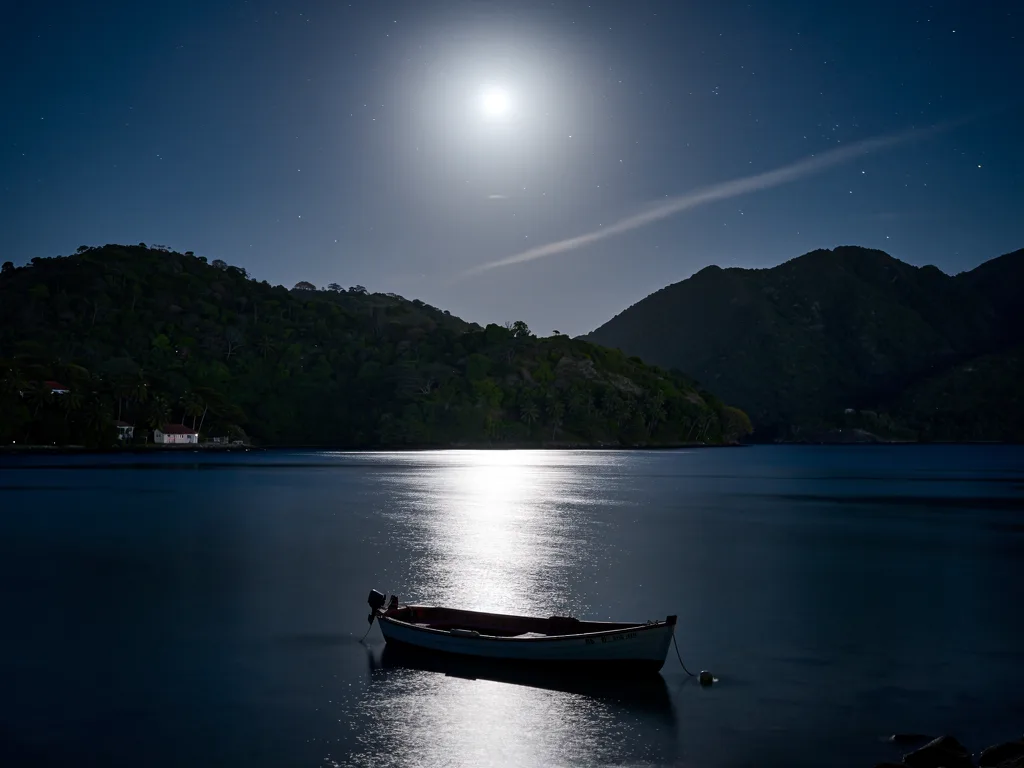
Imagine trolling crystal-clear Caribbean waters for blue marlin while a volcanic island rises dramatically behind you — this is fishing in Grenada. Known as the "Spice Island," Grenada is one of the Caribbean's most underrated sportfishing destinations, offering world-class offshore action, surprisingly relaxed regulations for visitors, and a warmth and authenticity that larger tourist islands often lack. Whether you're chasing blue marlin in the Atlantic swells, wahoo over deep blue drop-offs, or yellowfin tuna in the warm Caribbean currents, Grenada delivers an experience that will stay with you long after the fish is unhooked.
This comprehensive guide covers everything international anglers need to know: fishing permits, regulations, the best fishing spots and seasons, charter options with prices, and practical travel tips for planning your trip to this Caribbean gem.
01Do You Need a Fishing License in Grenada?
The licensing situation in Grenada is one of the most visitor-friendly in the entire Caribbean — and it's worth understanding before you arrive.
Recreational trolling while underway requires no license. If you're aboard a charter boat trolling for marlin, wahoo, or tuna as a paying passenger, you are not required to hold a personal fishing license. This makes Grenada immediately accessible to the vast majority of visiting anglers.
However, there are important distinctions:
Tip: For most visiting anglers booking a charter, you don't need to worry about licenses at all. The charter company manages compliance. Always confirm this when booking.
02Fishing Regulations You Must Know
While Grenada is relatively open to recreational fishing, several important rules apply — particularly around protected species and methods.
Spearfishing: Prohibited for Non-Residents
This is perhaps the most important rule for visiting divers and snorkelers to know: spearfishing is strictly illegal for all non-residents of Grenada. This applies regardless of equipment type or location. Do not bring a speargun if you are a visitor — the penalties can be severe, particularly under Grenada's recently strengthened fisheries legislation.
Seine Nets
The use of seine nets is prohibited without explicit written permission from the Chief Fisheries Officer. If permission is granted, the mesh size must comply with current regulations. This restriction does not affect recreational anglers using rod and reel.
Marine Protected Areas (MPAs)
Three Marine Protected Areas are established under Grenada's Fisheries Act, where fishing is restricted or prohibited:
1. Woburn / Clarks Court Bay
2. Moliniere-Beausejour
3. Sandy Island / Oyster Bed
These MPAs protect some of Grenada's most vibrant reef ecosystems and are popular with divers. Fishing within these zones is either restricted or entirely prohibited. Always check current rules with local authorities or your charter operator before fishing near these areas.
Species Size Limits and Closed Seasons
Grenada enforces minimum size limits on key species to protect breeding populations. These apply to all anglers:
| Species | Minimum Size / Rule |
|---|---|
| Spiny Lobster | Carapace length min. 3.5 inches (8.9 cm); no berried females or molting individuals |
| Queen Conch | Minimum shell length 7 inches (17.8 cm) |
| Sea Urchin | Minimum diameter 3.5 inches (8.9 cm) |
| Oysters | Harvest requires permission from the Chief Fisheries Officer |
Closed Season for Shellfish: June 1 – October 15. During this period, taking lobster, conch, and other shellfish is prohibited.
Important: These regulations are primarily relevant for free divers, snorkelers, and shallow-water fishers. Offshore sportfishing for pelagic species such as marlin, wahoo, tuna, and mahi-mahi is not subject to shellfish closed seasons and is available year-round.
2025–2026 Legislative Updates
Grenada has recently strengthened its fisheries laws in a significant way. In November 2025, the Grenada House of Representatives unanimously passed the Fisheries (Amendment) Bill 2025, bringing the country's legislation in line with U.S. Marine Mammal Protection Act (MMPA) requirements. Key changes include:
Additionally, Grenada is piloting a digital vessel monitoring program, installing electronic monitoring systems (EMS/VMS) on longline vessels to improve fisheries oversight.
Note: Regulations in Grenada are actively evolving. Always verify the latest rules with the Fisheries Division of the Ministry of the Blue Economy and Marine Affairs or your charter operator before your trip.
03Fishing in Grenada: The Experience
This is where Grenada truly shines. The island sits at the southern end of the Windward Islands, with warm Atlantic and Caribbean waters on either side — and that geography creates extraordinary fishing.
Offshore Pelagic Fishing: The Star Attraction
Grenada's deep blue offshore waters are where most visiting anglers head, and for good reason. The island's steep underwater topography means that deep water — and the big game fish that live in it — is never far from shore. Within just a few miles of St. George's Harbour, you can be fishing in water over 1,000 metres (3,300 ft) deep.
Blue Marlin are the headline act. Grenada consistently produces impressive blue marlin catches, and the fish can be found in its waters year-round. However, the prime season runs from October through May, when marlin concentrations peak and sea conditions are generally favorable. Boat anglers targeting marlin use heavy tackle, trolling lures and rigged ballyhoo over the deep blue drop-offs.
Sailfish also frequent these waters and provide spectacular aerial acrobatics on lighter tackle. Like marlin, they're present year-round but peak in the cooler, calmer months.
Wahoo (Ono) are a local favourite — fast, aggressive, and delicious. These powerful fish are caught trolling at speed over the underwater ridges and seamounts that dot Grenada's offshore terrain. Wahoo action can be exceptional between November and April.
Yellowfin Tuna gather in impressive numbers, particularly around floating debris, birds, and current lines. Schools of 20–40 kg (44–88 lb) fish are not uncommon, and larger specimens over 90 kg (200 lb) have been landed.
Mahi-Mahi (Dolphinfish) thrive in Grenada's warm waters and are arguably the most exciting inshore offshore species. They're abundant near floating weed lines and debris, willing biters, and extraordinary fighters — all while being among the finest eating fish in the Caribbean.
Inshore and Reef Fishing
For anglers who prefer a more relaxed pace, Grenada's reefs and inshore waters offer excellent fishing for:
The Spice Island Atmosphere
What makes fishing in Grenada uniquely memorable isn't just the fish. As you cruise offshore, the island's silhouette — lush green volcanic hills dotted with nutmeg and cocoa farms — sits on the horizon. Local fishing boats, known as *pirogue*, head out each morning from small fishing communities like Gouyave and Victoria. The smell of spices still seems to carry on the breeze. After a day on the water, fresh-caught fish served at a local restaurant with rum punch and callaloo is as good as Caribbean life gets.
🎣 Fishing tours in Grenada — Book guided fishing tours with local experts.
04Best Fishing Season in Grenada
Grenada's tropical location means fishing is possible year-round, but conditions vary significantly by season.
| Month | Conditions | Target Species |
|---|---|---|
| January – April | Dry season, calm seas, excellent visibility | Blue marlin, wahoo, sailfish, tuna |
| May – June | Transition; some rain, still good fishing | Mahi-mahi, tuna, wahoo |
| July – September | Atlantic hurricane season; rougher seas possible | Inshore species; offshore trips may be limited |
| October – December | Peak marlin season begins; great conditions | Blue marlin, sailfish, wahoo, tuna |
Best overall months: January to April for the calmest conditions and most reliable offshore fishing. October to May for peak blue marlin action.
For visitors from the Southern Hemisphere (Australia, South Africa, New Zealand, Argentina): Grenada's peak fishing season (October–April) conveniently aligns with your summer/autumn months — an ideal time to escape to the Caribbean.
05Fishing Charters & Guided Trips in Grenada
Grenada has a well-developed sportfishing charter industry, particularly based out of St. George's Harbour (the capital) and the True Blue Bay area near the island's southern tip. Charter boats here are serious fishing machines — modern sportfishing vessels equipped with outriggers, fighting chairs, quality rod and reel setups, sonar, and GPS.
What to Expect on a Grenada Fishing Charter
Most charters include:
Charter Prices in Grenada (2026)
| Trip Type | Duration | Price (approx.) |
|---|---|---|
| Full-day offshore (big game) | 8–10 hours | XCD 1,500–2,500 / USD 550–925 / EUR 500–850 |
| Half-day offshore | 4–5 hours | XCD 900–1,500 / USD 345–550 / EUR 315–500 |
| Inshore / reef fishing | 4 hours | XCD 700–1,100 / USD 260–400 / EUR 240–370 |
*Prices are per boat (typically 4–6 passengers). Per-person cost on a shared charter is considerably lower.*
Tip: Grenada charters offer excellent value compared to more heavily touristed islands like Barbados or St. Barts. A full-day big game charter in Grenada costs roughly the same as a mid-range restaurant dinner for two in a European capital city — for a boat-load of anglers.
Top Charter Areas and Operators
The waters around Point Salines (near the international airport) and the Atlantic side off Grenada's east coast are particularly productive for offshore fishing. Many charter operators are based at:
🚤 Charter fishing in Grenada — Find and book charter boats with experienced captains.
06Practical Travel Information for International Anglers
Getting to Grenada
Maurice Bishop International Airport (GND) in Point Salines handles international flights. Major connections include:
Visa Requirements
Grenada is relatively open to international visitors:
| Nationality | Visa Required? |
|---|---|
| EU citizens | No visa required (up to 6 months) |
| US citizens | No visa required (up to 6 months) |
| UK citizens | No visa required (up to 6 months) |
| Canadian citizens | No visa required (up to 6 months) |
| Australian citizens | No visa required |
| Japanese citizens | No visa required |
| Most Caribbean nationals | No visa required |
Tip: Always verify current entry requirements with Grenada's embassy or consulate in your country before traveling, as conditions can change.
Currency and Costs
Grenada uses the Eastern Caribbean Dollar (XCD). The exchange rate is fixed at XCD 2.70 = USD 1.00. EUR and GBP are not widely accepted outside major hotels and marinas, but USD is often accepted alongside XCD.
Where to Stay
The best fishing bases in Grenada are in the south of the island, close to the main marina and charter hub:
🏨 Accommodation near fishing spots in Grenada — Find hotels and lodges close to the best waters.
Language
The official language is English, making Grenada uniquely accessible for English-speaking anglers worldwide. Unlike many Caribbean destinations, you will have no language barrier with charter captains, local guides, or officials. Even those from non-English speaking countries will find that the fishing and tourist industry is fully anglophone.
Health and Safety
Bringing Your Own Fishing Equipment
International anglers can bring their own rods, reels, and tackle without issue. When flying, pack rods in a hard rod tube and declare tackle at customs if asked. There are no restrictions on importing sporting fishing tackle for personal use. However, leaving tackle behind (gifting to local guides) is a common and appreciated practice.
🛒 Fishing equipment for your Grenada trip — Find the right gear for offshore Caribbean fishing.
07Frequently Asked Questions (FAQ)
Do I need a fishing license to fish in Grenada as a tourist?
In most cases, no. Recreational trolling while underway does not require a personal fishing license. If you book a charter, all permits are handled by the operator. If you intend to fish from your own vessel, a simple vessel registration with the District Fisheries Office is required (approximately XCD $14 / USD $5).
Is spearfishing allowed in Grenada for tourists?
No. Spearfishing is strictly prohibited for all non-residents of Grenada. This rule is enforced and violations can result in serious penalties.
What is the best time of year to fish in Grenada?
January to April offers the calmest seas and driest weather, making it ideal for offshore fishing. October to May is the peak season for blue marlin. July to September is hurricane season and some offshore trips may be limited by weather.
What fish can I catch in Grenada?
The main target species offshore are blue marlin, sailfish, wahoo, yellowfin tuna, and mahi-mahi (dolphinfish). Inshore, you can catch kingfish, barracuda, snapper, grouper, and various jack species.
How much does a fishing charter cost in Grenada?
Half-day charters start from approximately XCD 900 / USD 345 / EUR 315. Full-day offshore trips cost approximately XCD 1,500–2,500 / USD 550–925 / EUR 500–850 per boat. These prices typically include all tackle, licenses, and refreshments.
Can I fish near the coral reefs in Grenada?
Yes, with restrictions. Three Marine Protected Areas — Woburn/Clarks Court Bay, Moliniere-Beausejour, and Sandy Island/Oyster Bed — have fishing restrictions or prohibitions. Always check with your charter captain or the Fisheries Division before fishing near reef areas.
Are there size limits for fish in Grenada?
Size limits apply primarily to shellfish: spiny lobster (min. 3.5-inch carapace), queen conch (min. 7-inch shell length), and sea urchin (min. 3.5-inch diameter). There is also a closed season for shellfish from June 1 to October 15. Pelagic species like marlin and tuna are subject to general conservation practices (catch-and-release is encouraged for billfish).
Is Grenada safe for international tourists?
Grenada is widely regarded as one of the safer Caribbean islands for tourists. Standard travel precautions apply, particularly in urban areas at night. Always purchase comprehensive travel insurance before your trip.
08Conclusion: Why Grenada Belongs on Every Angler's Bucket List
Grenada punches well above its weight as a fishing destination. The combination of accessible regulations (no license needed for most visiting anglers), spectacular offshore species including blue marlin and wahoo year-round, excellent modern charter operations, and a genuinely warm, English-speaking Caribbean culture makes this small island an outstanding choice for international anglers of all experience levels.
Whether you're a seasoned big game hunter targeting a 300 kg (660 lb) blue marlin on heavy tackle, or a first-time visitor who simply wants to spend a morning trolling with a cold rum punch in hand, Grenada has something extraordinary to offer. The Spice Island may be small, but its fishing is anything but.
Start planning your Grenada fishing trip today — the marlin are waiting.
09Sources & Further Information
*Disclaimer: The information in this article is provided for general informational purposes only and reflects our best research as of 2026. Fishing regulations, license requirements, fees, and permitted species are subject to change without notice. Always verify current rules with the Grenada Fisheries Division (Ministry of the Blue Economy and Marine Affairs) or your charter operator before fishing. Visa and entry requirements vary by nationality and may change; consult your country's embassy or the official Grenada government travel portal for the most up-to-date information. FishingWorldGuide.com accepts no liability for outdated information or decisions made based on this article.*
Recommended tours
Don't miss any fishing tips!
Get the best fishing destination recommendations weekly in your inbox.
No spam. Unsubscribe anytime.
Data incorrect?
Help us keep this article up to date — report outdated or incorrect information
More articles