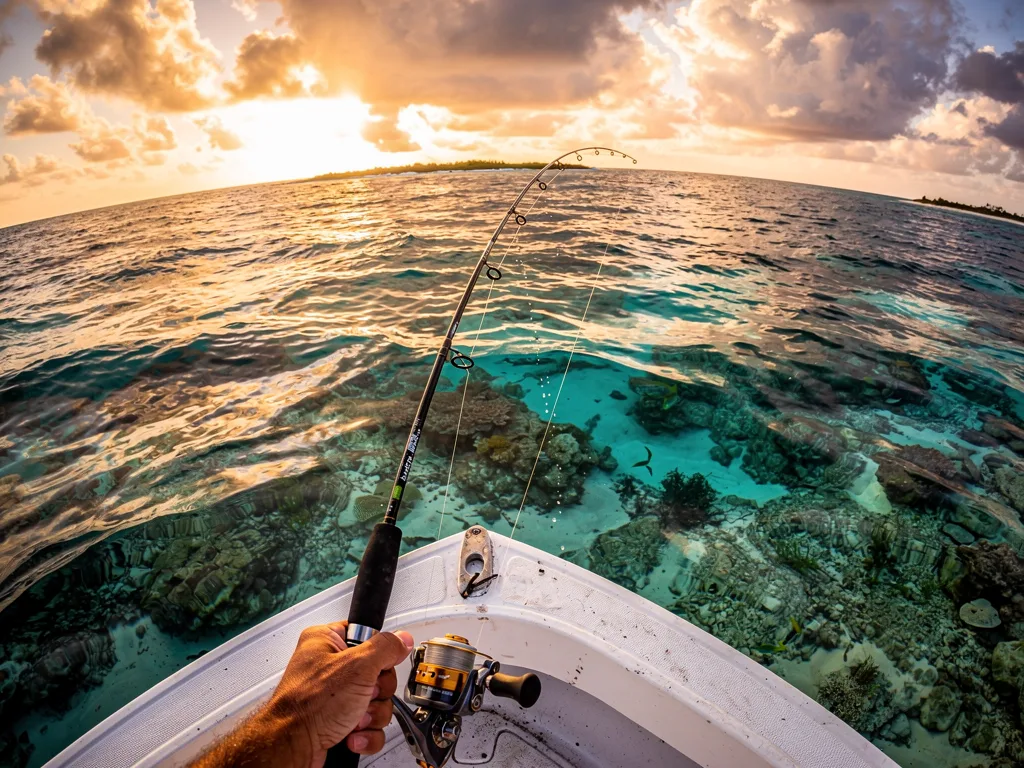
Imagine standing on the edge of a sun-drenched Caribbean flat, the crystal-clear water barely reaching your knees, as a ghost-like bonefish materializes from the shimmering haze. Or picture yourself offshore, fighting a powerful wahoo while flying fish leap across a cobalt blue sea. Fishing in the Cayman Islands is exactly this kind of dream — and the best part? There is no fishing license required, the water is among the clearest on earth, and world-class charter operators are ready to take you there. Whether you are a seasoned offshore angler chasing blue marlin or a first-time visitor hoping to flick a line from the shore at sunset, the Cayman Islands deliver one of the Caribbean's most memorable fishing experiences.
This complete 2026 guide covers everything international anglers need to know: regulations, the best fishing spots across Grand Cayman, Cayman Brac, and Little Cayman, guided tours and charter options with prices, seasonal timing, and practical travel tips — so you can focus on what matters most: tight lines and spectacular scenery.
01Do You Need a Fishing License in the Cayman Islands?
Here is the headline good news: there is currently no fishing license requirement and no license fee for anyone fishing in the Cayman Islands, whether you are a resident or an international visitor. This applies equally to tourists from the EU, USA, UK, Australia, Japan, and everywhere else in the world.
However, this does not mean there are no rules. The Cayman Islands have a well-developed marine conservation framework enforced by the Cayman Islands Department of Environment (DoE), and the regulations carry serious penalties — up to CI$500,000 (approximately €560,000 / US$610,000) and one year in jail for violations. Knowing the rules before you cast is not just advisable — it is essential.
Tip: If you are fishing with a licensed charter operator, they will handle all regulatory compliance on your behalf. This is the easiest and most stress-free way to fish in the Cayman Islands, especially on your first visit.
02Key Fishing Regulations You Must Know
Shore Fishing Rules
Fishing from shore is permitted in many areas, but there is an important distinction:
Use the DoE's free public app (available on Apple App Store and Google Play) to check whether your chosen shore fishing location falls within an open zone or a protected Marine Park. This app is an essential tool for any angler in the Cayman Islands.
Marine Park Zones
Fishing is prohibited in Marine Park Zones, which cover a significant portion of inshore waters. However, line fishing from shore is permitted within Marine Parks, as is line fishing at depths of 80 feet (24 metres) or more. The key is knowing the map — download it from www.doe.ky before you go.
Prohibited Methods
Size Limits
As a general rule, only fish longer than 8 inches (20 cm) nose-to-tail may be kept. There are exceptions and species-specific rules — see below.
Fully Protected Species (Never Remove)
The following species may not be taken at any time:
Seasonal Restrictions and Catch Limits
| Species | Closed Season | Open Season Limit |
|---|---|---|
| Lobster | 1 March – 30 November | Max 3 per person / 6 per boat; min. 6 inches long |
| Conch | 1 May – 30 October | Max 5 per person / 10 per boat |
| Nassau Grouper | 1 December – 30 April | Max 5 per person or per boat per day; 16–24 inches only |
Important: It is illegal to fish within one mile of any designated Nassau Grouper Spawning Area during restricted periods. Designated spawning areas include Coxswain Bank and South West Point in Grand Cayman, both ends of Cayman Brac, Little Cayman, and the Twelve Mile Bank.
Export Restrictions
03The Best Fishing Spots in the Cayman Islands
This is where the Cayman Islands truly shine. With three distinct islands, a dramatic underwater topography, shallow flats, reef systems, and open ocean access, the variety of fishing experiences is extraordinary.
Grand Cayman: The Offshore Powerhouse
Grand Cayman is the largest and most visited of the three islands, and it offers some of the Caribbean's finest offshore and deep-sea fishing. The island sits at the edge of the Cayman Trench — one of the deepest points in the Atlantic-Caribbean basin — meaning blue water and pelagic species are just a short boat ride from shore.
Target species offshore:
The drop-off along the North Wall of Grand Cayman is legendary among divers, but it is also prime trolling territory. Anglers work the edge where the reef shelf falls away sharply into the deep blue, targeting marlin and wahoo on live bait and skirted lures.
Inshore and reef fishing on Grand Cayman:
The Flats: Bonefish and Permit
Grand Cayman's North Sound and the flats around Little Cayman offer some of the finest bonefishing in the Caribbean. These ghost-like fish, prized for their speed and wariness, are best pursued on the shallow sandy flats in the early morning when the light is low and the tide is right.
Tip: May is considered the peak month for bonefishing in the Cayman Islands. The North Sound flats in Grand Cayman and the flats around Little Cayman are the top destinations. A local guide is almost essential for flat fishing — these fish are spooky and the tides and light conditions need to be read correctly.
Cayman Brac: A Hidden Gem
Cayman Brac, the middle island, is less visited but offers excellent fishing in a more tranquil setting. The steep bluff of the island drops sharply into deep water on the southern side, making offshore fishing particularly productive. The island has a smaller fleet of charter operators, but the fishing pressure is lower and the experience more personal.
Little Cayman: The Bonefish Paradise
Little Cayman is the smallest and least developed of the three islands — and a paradise for fly fishers and inshore anglers. The flats here are expansive, largely unfished, and hold impressive populations of bonefish. The island has a handful of lodges that cater specifically to fishing guests, offering a focused, immersive experience.
🎣 Fishing tours in the Cayman Islands — Book guided fishing tours with local experts.
04Guided Fishing Tours & Charter Boats
Booking a guided trip is unquestionably the best way to make the most of your time on the water in the Cayman Islands — whether you are after blue marlin offshore, bonefish on the flats, or snapper on the reef. Local captains know the seasonal patterns, the productive spots, and the regulations inside out.
Charter Fishing on Grand Cayman
Grand Cayman has the largest selection of charter operators. Most are based at marinas in George Town or around North Sound.
Typical charter options and price ranges (2026):
| Charter Type | Duration | Price Range (USD) | Price Range (EUR) | Price Range (KYD) |
|---|---|---|---|---|
| Offshore / Deep Sea (full day) | 8 hours | US$1,200–$2,000 | €1,100–€1,850 | KYD 990–1,650 |
| Offshore / Deep Sea (half day) | 4 hours | US$700–$1,100 | €645–€1,015 | KYD 580–910 |
| Reef / Bottom Fishing | 4–6 hours | US$400–$800 | €370–€740 | KYD 330–660 |
| Inshore / Flats (bonefish) | 4–8 hours | US$400–$900 | €370–€830 | KYD 330–745 |
Note: Most charters are priced per boat (up to 4–6 anglers), not per person. Split between a group, the cost becomes very reasonable. According to FishingBooker, charter prices on Grand Cayman start from around US$350 for shorter trips.
What is typically included:
What is typically NOT included:
Notable Charter Operators
Several reputable charter companies operate on Grand Cayman:
Lionfish Culling: A Unique Opportunity
The Cayman Islands offer a genuinely unusual fishing experience: licensed lionfish culling. Lionfish are an invasive species causing serious damage to Caribbean reef ecosystems, and the DoE actively encourages their removal. Divers, snorkelers, and fishermen can obtain training and a license from the DoE to cull lionfish. Courses are held every three to four weeks. Contact doe@gov.ky to register.
🚤 Charter fishing in the Cayman Islands — Find and book charter boats with experienced captains.
05When to Go: Best Seasons for Fishing
The Cayman Islands enjoy a tropical climate with warm temperatures year-round, making fishing possible in every month. However, some seasons are significantly better than others for specific species.
Month-by-Month Overview
| Month | Best For | Notes |
|---|---|---|
| January–March | Wahoo, Sailfish, Reef Fishing | Cooler, drier; excellent offshore conditions |
| April–May | Mahi-Mahi, Tuna, Bonefish | Peak season; best overall fishing of the year |
| June–September | Marlin, Tarpon, Mahi-Mahi | Hurricane season; weather can be unpredictable |
| October–December | Wahoo, Nassau Grouper (Oct–Nov), Snapper | Transitional; good offshore fishing resumes |
Overall: April and May are widely regarded as the best months to fish in the Cayman Islands. The high season is warming up, big game fish like tuna are abundant offshore, and May is the peak month for bonefish and inshore species.
Planning from Different Hemispheres
Hurricane Season Note: The official Atlantic hurricane season runs June 1 to November 30. While the Cayman Islands are not struck every year, the risk is real during this period. Check weather forecasts carefully and ensure your travel insurance covers weather-related disruptions if traveling June–November.
06Practical Travel Information for International Anglers
Getting There
The Cayman Islands are a British Overseas Territory served by Owen Roberts International Airport (GCM) on Grand Cayman, with direct flights from:
Cayman Brac is served by Charles Kirkconnell International Airport (CYB), and Little Cayman has a small airstrip (LYB), both with connections from Grand Cayman via Cayman Airways.
Visa Requirements
The Cayman Islands are a British Overseas Territory, and entry requirements reflect this:
Always check the current entry requirements with the Cayman Islands Government or your nearest British Embassy/Consulate before traveling, as requirements can change.
Currency
The local currency is the Cayman Islands Dollar (KYD), pegged to the US Dollar at a rate of KYD 1 = US$1.20 (approximately €1.10 as of 2026). The US Dollar is widely accepted everywhere. Credit cards (Visa, Mastercard, Amex) are accepted at virtually all businesses. ATMs are available in George Town and major resort areas.
Language
English is the official language of the Cayman Islands. You will experience no language barrier as a visitor from any English-speaking country. Signs, menus, and official communications are all in English. For non-English speakers, translation apps such as Google Translate work well, and most tourism industry staff speak at least some additional languages.
Getting Around
Accommodation Options
Grand Cayman has a wide range of accommodation, from luxury resorts on Seven Mile Beach to self-catering villas and budget-friendly guesthouses. Little Cayman has several fishing-focused lodges that cater specifically to anglers. Cayman Brac offers a more modest selection but with a genuinely local, relaxed atmosphere.
🏨 Accommodation near fishing spots in the Cayman Islands — Find hotels and lodges close to the best waters.
07Fishing Equipment: What to Bring
Gear Recommendations by Fishing Style
Offshore / Deep Sea Fishing:
Charter boats supply all tackle, but serious anglers may prefer to bring their own rods. Heavy spinning or conventional gear (50–80 lb class) is appropriate for marlin and wahoo. Most captains are happy for you to use your own equipment.
Reef and Bottom Fishing:
Medium spinning or baitcasting tackle (20–30 lb class) handles snapper and grouper comfortably. Again, charters supply everything.
Inshore / Flats Fishing:
This is where bringing your own gear pays dividends. For bonefishing:
Important Note on Spearfishing Equipment: Do not bring any spearing device to the Cayman Islands. Importing spearfishing gear is illegal for non-Caymanians.
Buying or Renting Equipment Locally
Fishing tackle is available in George Town and from some charter operators. Selection is more limited than in larger destinations, so bring specialized items (fly lines, specific lures) from home. Reef-safe sunscreen, polarized sunglasses, and a hat are essential and widely available locally.
🛒 Fishing equipment for the Cayman Islands — Find the right gear for your trip.
08Costs: What to Budget for a Fishing Trip
| Expense | Low Budget | Mid Range | Premium |
|---|---|---|---|
| Charter (half day, split 4 ways) | US$88/person | US$175/person | US$275/person |
| Charter (full day, split 4 ways) | US$300/person | US$450/person | US$600/person |
| Accommodation (per night) | US$120 (guesthouse) | US$250 (mid hotel) | US$600+ (resort/villa) |
| Meals (per day) | US$30–40 | US$60–80 | US$150+ |
| Shore fishing permit (to keep fish) | Minimal/free | — | — |
| Lionfish culling course | Contact DoE | — | — |
Context: A mid-range half-day charter split between four anglers costs roughly the same as a good dinner at a George Town restaurant per person. Fishing in the Cayman Islands is not cheap by global standards, but the quality — the clarity of the water, the professionalism of the operators, and the scenery — is exceptional.
09Conservation: Fishing Sustainably in the Cayman Islands
The Cayman Islands take marine conservation extremely seriously, and this is a large part of why the fishing remains so good. The Department of Environment manages one of the Caribbean's most comprehensive marine park systems, and the regulations exist to ensure that future generations — including visiting anglers — continue to enjoy these waters.
As a visitor, you can contribute to this by:
10FAQ: Fishing in the Cayman Islands
Do I need a fishing license in the Cayman Islands?
No. There is currently no fishing license requirement or fee for recreational fishing in the Cayman Islands, for residents or visitors. However, a permit is required if you want to keep fish caught from shore (catch and release is free). If fishing with a licensed charter operator, all compliance is handled for you.
Can I go spearfishing in the Cayman Islands?
No. Spearfishing of any kind is prohibited for non-Caymanians, and importing any spearing device into the Cayman Islands is illegal. This rule is strictly enforced.
What is the best time of year to fish in the Cayman Islands?
April and May are generally considered the best months, offering peak conditions for offshore species like tuna and mahi-mahi, as well as the peak season for bonefish. Good fishing is available year-round, but the hurricane season (June–November) can bring unpredictable weather.
Can I fish in Marine Parks?
Fishing is prohibited in Marine Park Zones in most cases. However, line fishing from shore is permitted within Marine Parks, as is line fishing at depths of 80 feet (24 metres) or more. Use the DoE app to check specific locations before fishing.
What species are fully protected and can never be kept?
Goliath Grouper (Jewfish), Tilefish, Filefish, Angelfish (Grey, French, and Queen), Sharks, and Rays are all fully protected and may never be removed from Cayman waters.
How much does a fishing charter cost in the Cayman Islands?
Charter prices vary by type and duration. Half-day reef or inshore charters start from around US$350–400 per boat. Full-day offshore charters for marlin and wahoo typically cost US$1,200–$2,000 per boat. Split between 4–6 anglers, costs become more manageable.
Is shore fishing good in the Cayman Islands?
Yes, shore fishing can be excellent in open zones around all three islands. Popular targets from shore include snapper, jack, and barracuda. Check the DoE app to confirm your chosen spot is in an open zone, and remember that catch and release is required unless you hold a shore fishing permit.
Can I bring my own fishing gear to the Cayman Islands?
Yes, you can bring your own rods, reels, and tackle — with the important exception that importing any spearing device is illegal. For offshore and reef charters, all tackle is supplied. Bringing your own fly or light spinning gear is recommended for bonefishing on the flats.
11Conclusion: Cast Your Line in Paradise
The Cayman Islands offer a remarkably accessible and rewarding fishing destination for international anglers. No license is required, the water is spectacularly clear, the marine life is diverse and well-managed, and the charter fishing industry is professional and well-established. Whether you are targeting blue marlin in the deep blue beyond the North Wall, stalking bonefish on the pristine flats of Little Cayman, or simply dropping a line from a dock at sunset, this British Caribbean gem delivers an unforgettable experience.
Plan your trip for April or May for the best all-around fishing, book your charter well in advance (especially for Little Cayman lodges), download the DoE app before you travel, and respect the conservation rules that keep these waters so productive. The Cayman Islands are waiting — and the fish are ready.
12Sources & Further Reading
*Disclaimer: The information in this article was researched and compiled in April 2026. Fishing regulations, catch limits, closed seasons, and permit requirements in the Cayman Islands can change without notice. Always verify current rules with the Cayman Islands Department of Environment (doe@gov.ky) before fishing. Penalties for violations are severe. FishingWorldGuide.com accepts no liability for any regulatory violations or losses arising from the use of information in this article. Travel conditions, visa requirements, and charter prices are subject to change — check with official sources and operators before booking.*
Fishing trips in Cayman Islands
Curated tours & charters with price and click data from our partner dashboards.
 FishingBooker
Outcast Charters Cayman
 FishingBooker
Happy Day Charters
 FishingBooker
Reel Vibes Charters
Don't miss any fishing tips!
Get the best fishing destination recommendations weekly in your inbox.
No spam. Unsubscribe anytime.
Read more
Data incorrect?
Help us keep this article up to date — report outdated or incorrect information
More articles