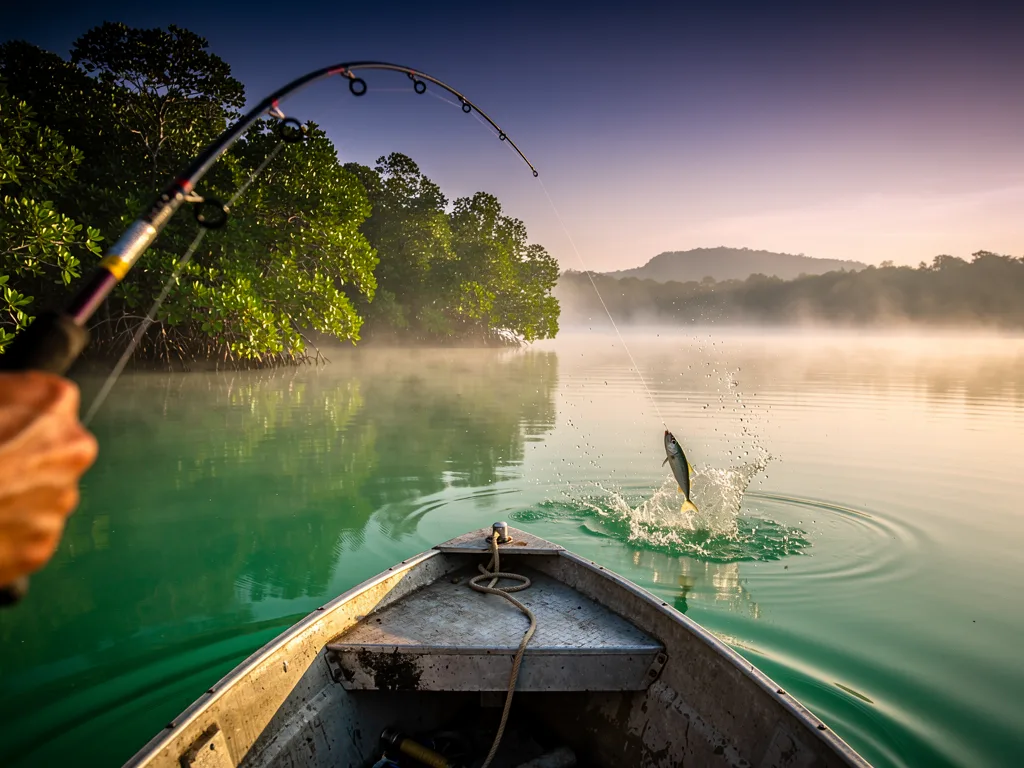
Imagine standing on the bow of a skiff at first light, the Caribbean sun just cresting the horizon over the world's second-largest barrier reef, a massive bonefish tailing in ankle-deep water thirty metres ahead of you. Welcome to fishing in Belize — one of the most spectacular angling destinations on the planet. From flats fishing for the legendary "grand slam" (bonefish, permit, and tarpon in a single day) to deep-sea action over the Blue Hole, Belize packs more fishing variety into a small country than almost anywhere else in Central America.
This complete guide covers everything international anglers need to plan their Belize fishing trip: sport fishing licenses, current regulations, the best fishing spots, guided tours, and essential travel information.
01Why Belize Is a World-Class Fishing Destination
Belize punches far above its weight as a fishing destination. Roughly the size of Wales or the state of Massachusetts, this small nation on the Caribbean coast of Central America is home to:
Belize also leads Central America in marine conservation. Approximately 22% of its national marine area is protected, and the country enforces strict catch-and-release rules for its three most iconic flats species. This commitment to conservation is precisely what keeps the fishing so extraordinary.
02Fishing Licenses in Belize
Who Needs a Sport Fishing License?
Anyone between the ages of 16 and 65 — whether a visitor or a resident — is required to hold a valid sport fishing license before fishing in Belizean waters. This applies whether you are fishing from a boat, from shore, or from a dock. There are no exceptions for tourists.
Belizean citizens and permanent residents aged 65 and over are exempt and may fish free of charge. Children under 16 may also be exempt, though the government's guidelines on this have at times been ambiguous — when in doubt, play it safe and obtain a license.
Tip: If you book a guided trip through a registered fishing lodge or guide, they will typically handle your license as part of the package. Always confirm this before your trip.
License Types and Costs
| License Type | Cost (BZD) | Cost (USD) | Cost (EUR approx.) |
|---|---|---|---|
| 1-Day License | BZ$20 | ~USD $10 | ~€9 |
| 1-Week License | BZ$50 | ~USD $25 | ~€23 |
| Annual License | BZ$100 | ~USD $50 | ~€46 |
*Note: The Belize Dollar (BZD) is pegged to the US Dollar at a fixed rate of 2:1. Prices may change — always verify with official sources before your trip.*
The daily and weekly licenses are extremely affordable — roughly the cost of a coffee and a snack at a tourist café in Belize City. There is no reason to risk fishing without one, especially given the significant fines for non-compliance.
How to Get Your License
The easiest way to obtain a sport fishing license is through the Coastal Zone Management Authority and Institute (CZMAI) online portal at apps.coastalzonebelize.org. Fill out the electronic form, pay online, and save the confirmation to your phone or print it out.
Alternatively, your fishing guide or lodge can arrange the license on your behalf — a common and convenient option for visitors.
Annual licenses can also be applied for in person at the CZMAI offices. Contact details:
03Fishing Regulations You Must Know
Belize takes its fisheries regulations seriously. Ignorance of the rules is not accepted as a defence, and enforcement on the water is active. Here is what every visiting angler must know.
Mandatory Catch-and-Release Species
Three species are completely protected and must be released immediately, without exception:
Possession of any of these species — alive or dead — is illegal. These are the stars of Belize's flats fishing scene, and their protection is what makes Belizean fishing legendary. Embrace catch-and-release; it is part of the culture here.
Other Protected Species
The following species are also fully protected and may not be targeted, harmed, or possessed:
Closed Seasons
| Species | Closed Season |
|---|---|
| Conch | July 1 – September 30 |
| Lobster | February 15 – June 14 |
| Nassau Grouper | December 1 – March 31 |
Minimum Size Requirements
Shark Fishing
Shark fishing requires a special license from the Fisheries Administrator. All sharks must be landed with fins naturally attached — shark finning is strictly prohibited. Several species (large hammerheads, silky sharks, thresher sharks) require a CITES permit for export.
Gear Restrictions
Penalties for Non-Compliance
Fishing without a license can result in a fine of up to BZ$500 (~USD $250) or up to six months in jail. Violations involving protected species, undersized catches, or gear restrictions in MPAs can carry even harsher penalties.
Tip: Always carry a printed or digital copy of your fishing license while on the water. Rangers patrol both inshore and offshore areas regularly.
04The Best Fishing Spots in Belize
This is where Belize truly shines. Whether you are a first-time visitor or a seasoned saltwater angler, the diversity and quality of Belize's fishing grounds are genuinely breathtaking.
Ambergris Caye — The Flats Fishing Capital
Ambergris Caye is Belize's largest island and the hub of its sport fishing industry. San Pedro, the main town, is home to dozens of guides and charter operators, and the surrounding waters offer world-class bonefish flats right on the doorstep.
The shallow backcountry flats between Ambergris Caye and the mainland are a bonefish paradise — schools of fish tailing in crystal-clear water over white sand, with the reef shimmering in the distance. Permit cruise along the edges of the flats and in deeper channels, while tarpon roll in the lagoons at dawn and dusk.
The Hol Chan Marine Reserve, just off the southern tip of Ambergris Caye, is a no-fishing zone — but the waters immediately surrounding it are exceptionally productive for snorkelling and for fishing just outside the reserve boundaries.
The Turneffe Atoll — Remote and Extraordinary
Roughly 40 km (25 miles) east of Belize City lies the Turneffe Atoll — the largest atoll in the Western Hemisphere and arguably the finest flats fishing destination in the world. The atoll's interior lagoons shelter extraordinary numbers of bonefish, while its edges hold permit and resident populations of massive tarpon.
Fishing the Turneffe feels like stepping back in time. The flats are pristine, the wildlife abundant, and — because access requires a boat journey — the pressure from other anglers is minimal. Several exclusive lodges operate within the atoll, offering all-inclusive packages for serious fly fishers.
South Water Caye Marine Reserve — Offshore and Reef Fishing
Further south along the barrier reef, the South Water Caye Marine Reserve is one of Belize's most biodiverse marine areas. While fishing within the reserve itself is restricted to catch-and-release only (with a valid license), the waters surrounding it offer outstanding reef fishing for snapper, grouper, and jack — as well as access to the deep offshore channels where wahoo, kingfish, and pelagic species patrol.
Placencia — Southern Belize's Hidden Gem
The Placencia Peninsula in southern Belize is one of the country's fastest-growing fishing destinations. Anglers here have access to both inshore flats (excellent for permit and bonefish) and nearshore reefs (grouper, snapper, barracuda), as well as the vast brackish lagoons behind the peninsula where snook fishing can be exceptional.
The town of Placencia itself is a relaxed, friendly village with a growing number of quality guides and lodges — and significantly fewer tourists than Ambergris Caye.
Corozal and the Northern Lagoons
In the far north of Belize, near the border with Mexico, Corozal Bay and the surrounding lagoons offer outstanding fishing for snook, tarpon, and jack in a more remote, off-the-beaten-path setting. This area is popular with budget-conscious anglers and those who prefer a quieter experience away from the main tourist centres.
Blue Hole and Offshore — Deep-Sea Adventure
Belize's famous Blue Hole — a 300-metre (984-foot) wide underwater sinkhole visible from space — is located within the Lighthouse Reef Atoll. While the Blue Hole itself is a diving destination rather than a fishing spot, the surrounding reef system and the deep offshore waters beyond offer spectacular pelagic fishing for blue marlin, white marlin, sailfish, mahi-mahi (dorado), and wahoo.
Full-day offshore charters departing from Belize City or Ambergris Caye typically target these species, and the action during peak season (April–September for mahi-mahi and sailfish) can be outstanding.
🎣 Fishing tours in Belize — Book guided fishing tours with local experts.
05Fishing Species Guide
Bonefish
The ghost of the flats. Bonefish in Belize average 1–3 kg (2–6 lb), with larger fish over 4 kg (9 lb) not uncommon. They are fast, powerful, and notoriously wary — perfect for sight fishing on a fly or with light spinning tackle. Mandatory catch-and-release.
Permit
The holy grail of flats fishing. Permit are intelligent, suspicious fish that can be incredibly frustrating and extraordinarily rewarding. Belize holds some of the highest densities of permit in the Caribbean, and the Turneffe Atoll in particular is famous for large fish in the 5–10 kg (11–22 lb) range. Mandatory catch-and-release.
Tarpon
The "silver king." Tarpon in Belize can exceed 50 kg (110 lb), and hooking one — even briefly — is an unforgettable experience. Peak tarpon season runs from June to August as fish migrate through Belizean waters. Mandatory catch-and-release.
Snook
A popular target for anglers who prefer something for the table. Snook lurk around mangroves, river mouths, and lagoons — check current size and bag limits with the Fisheries Department.
Offshore Species
06Guided Fishing Tours and Charters in Belize
Why Book a Guide?
For most visiting anglers, hiring a local guide is not just recommended — it is essential. The flats fishing in Belize is highly technical; knowing which channels to pole, how to read the water, and where the fish are moving with the tides and season requires intimate local knowledge. A good guide dramatically improves your chances of success and ensures you stay on the right side of local regulations.
Types of Guided Experiences
Half-Day Flats Fishing (Inshore)
Typically 4–5 hours on the skiff, targeting bonefish, permit, or tarpon in the backcountry. Ideal for beginners or those who want to experience flats fishing alongside other activities.
Full-Day Flats Fishing
7–8 hours of guided fishing, covering more ground and increasing the chance of a grand slam attempt.
Offshore / Deep-Sea Charter
Full-day trips targeting mahi-mahi, sailfish, marlin, and wahoo. Typically depart Belize City, Ambergris Caye, or Placencia.
All-Inclusive Fishing Lodges
Lodges at Turneffe Atoll, Placencia, and other locations offer week-long packages including accommodation, meals, guides, and boats.
Tip: Most reputable guides and lodges include your fishing license in the package price. Always confirm this in advance.
🚤 Charter fishing in Belize — Find and book charter boats with experienced captains.
Finding a Reputable Guide
Look for guides registered with the Belize Tourism Board and members of local guiding associations. Platforms like FishingBooker allow you to read reviews and compare certified operators. Lodges such as Blue Horizon Lodge on Glover's Reef Atoll have established reputations for quality guiding and conservation ethics.
07Best Time to Fish in Belize
Belize is a year-round fishing destination, but different seasons offer different highlights.
| Month | Conditions | Target Species |
|---|---|---|
| January–March | Dry season, calm seas, good visibility | Permit, bonefish, sailfish |
| April–June | Warming waters, slight winds | Permit (peak), mahi-mahi |
| June–August | Tarpon migration peak, tropical showers | Tarpon, mahi-mahi, bonefish |
| September–October | Hurricane season, some choppy days | Snook, lagoon species |
| November–December | Cooling, northerly winds ("Northers") | Sailfish, offshore species, bonefish |
For Southern Hemisphere visitors (Australia, New Zealand, South Africa, Argentina): Belize's peak flats season (March–June) falls during your autumn/winter — a perfect time to escape the cold for a week of tropical fishing.
08Practical Travel Information for International Visitors
Getting to Belize
Philip S.W. Goldson International Airport (BZE) near Belize City is the main point of entry. Direct or connecting flights are available from:
Visa Requirements
| Nationality | Visa Required? |
|---|---|
| EU citizens | No visa required (up to 30 days, extendable) |
| US citizens | No visa required (up to 30 days, extendable) |
| UK citizens | No visa required (up to 30 days, extendable) |
| Canadian citizens | No visa required |
| Australian citizens | No visa required (up to 30 days) |
| Japanese citizens | No visa required |
| Most other nationalities | Check with Belize Immigration Department |
A tourism fee of USD $3.75 per day is typically included in your departure tax. Always verify current entry requirements before travel, as rules can change.
Currency and Money
Language
English is the official language of Belize — an enormous advantage for international anglers. Spanish, Kriol, Garifuna, and Maya languages are also spoken in different regions. You will have no language barrier at lodges, guide operations, or in tourist areas.
Health and Safety
Getting Around
🏨 Accommodation near fishing spots in Belize — Find hotels and lodges close to the best waters.
09Gear and Equipment
What to Bring
For flats fishing (fly fishing):
For spinning/light tackle:
Essential accessories:
Tip: Quality fishing lodges and guides in Belize supply rods, reels, and flies if needed, but serious anglers should bring their own preferred tackle.
🛒 Fishing equipment for Belize — Find the right gear for your trip.
10Cost Overview: Fishing in Belize
| Item | Cost (USD approx.) |
|---|---|
| 1-Day sport fishing license | ~$10 |
| 1-Week sport fishing license | ~$25 |
| Half-day guided flats trip (per boat) | $300–$450 |
| Full-day guided flats trip (per boat) | $450–$650 |
| Full-day offshore charter (per boat) | $600–$1,200 |
| All-inclusive lodge week (per person) | $3,500–$7,000 |
| Budget guesthouse (per night) | $40–$80 |
| Mid-range hotel (per night) | $100–$200 |
| Resort/fishing lodge (per night) | $200–$600+ |
| Domestic flight (Belize City to San Pedro) | ~$80–$100 |
Belize is not a budget fishing destination — but the quality of the experience justifies the cost for serious anglers. The license fee alone is one of the best-value investments you will make.
11FAQ: Fishing in Belize
Do I need a fishing license in Belize as a tourist?
Yes. Any person between the ages of 16 and 65 — regardless of nationality — requires a valid sport fishing license to fish in Belizean waters. You can obtain one online through the Coastal Zone Management Authority portal, or your guide can arrange it as part of a guided package.
How much does a fishing license cost in Belize?
A one-day license costs BZ$20 (~USD $10 / ~€9). A one-week license costs BZ$50 (~USD $25 / ~€23). An annual license costs BZ$100 (~USD $50 / ~€46).
Can I keep bonefish, tarpon, or permit in Belize?
No. Bonefish, tarpon, and permit are mandatory catch-and-release species in Belize. It is illegal to possess any of these fish. They must be returned to the water immediately after being caught.
When is the best time to fish in Belize?
Belize offers good fishing year-round. March to June is considered peak season for permit, while June to August is the prime tarpon migration period. Sailfish are most abundant from November to March.
What is a "Belize Grand Slam" in fishing?
A grand slam in Belize means catching all three of the country's iconic flats species — bonefish, permit, and tarpon — in a single day. It is one of the most coveted achievements in saltwater fly fishing, and Belize is one of the best places in the world to attempt it. All three fish must be released.
Is English spoken in Belize?
Yes. English is the official and most widely spoken language in Belize, making it one of the most accessible fishing destinations in Central America for anglers from English-speaking countries.
Are there Marine Protected Areas where fishing is banned?
Yes. Approximately 22% of Belize's marine area is protected. Key no-fishing zones include Hol Chan Marine Reserve, South Water Caye Marine Reserve, and Bacalar Chico National Park. Catch-and-release recreational fishing with a valid license is allowed in some MPAs — check local regulations carefully.
Can I use my own fishing gear in Belize?
Yes. There are no restrictions on bringing your own fishing equipment as personal luggage. Fly rods travel well in rod tubes. Fishing guides and lodges typically also provide quality gear if needed.
What happens if I fish without a license in Belize?
Fishing without a valid license can result in a fine of up to BZ$500 (~USD $250) or up to six months in jail. Active enforcement means this is a real risk, not a theoretical one.
12Conclusion: Belize Is Waiting
Belize is not just a great fishing destination — it is a transformative one. The combination of pristine flats, a strict conservation ethic, warm and welcoming guides, and English as the official language makes it uniquely accessible and extraordinary for international anglers. Whether you are chasing your first bonefish on a fly rod, attempting the legendary grand slam, or battling a blue marlin offshore, Belize delivers an experience that will stay with you for a lifetime.
The fishing is extraordinary precisely because it is protected. Respect the regulations, embrace catch-and-release for the iconic flats species, and you will be contributing to the conservation of one of the world's great fisheries — while enjoying some of the finest angling on earth.
Book your license, book your guide, and go.
13Sources & Further Links
*Disclaimer: All information in this article is provided for general informational purposes only. Fishing regulations, license fees, closed seasons, and protected species lists are subject to change without notice. Always verify current rules and requirements with the Belize Fisheries Department (fisheries.gov.bz) and the Coastal Zone Management Authority (apps.coastalzonebelize.org) before your trip. The authors and publishers of this guide accept no responsibility for errors, omissions, or changes in regulations. Prices shown are approximate and may vary. This article was last updated in 2026.*
Recommended tours
Don't miss any fishing tips!
Get the best fishing destination recommendations weekly in your inbox.
No spam. Unsubscribe anytime.
Data incorrect?
Help us keep this article up to date — report outdated or incorrect information
More articles