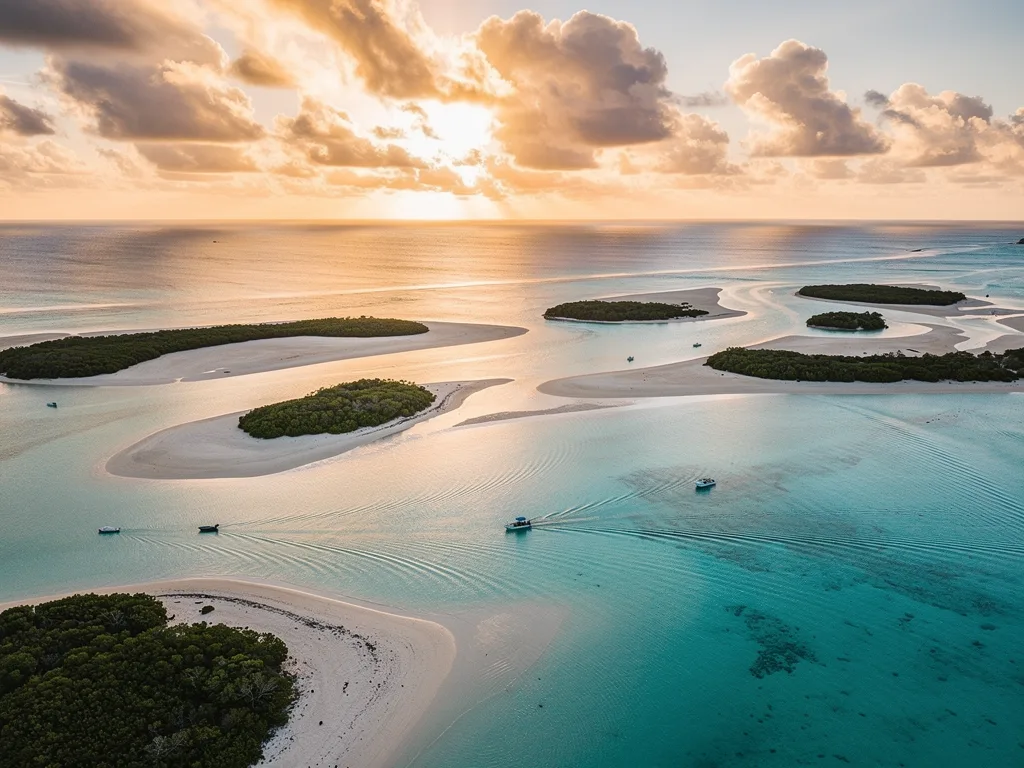
Picture this: you're standing on a white-sand flat at dawn, the water so clear it looks like liquid glass, and a school of bonefish is tailing just 15 metres (50 feet) ahead. Or maybe you're offshore, lines in the water, waiting for a mahi-mahi to crash a trolled lure while flying fish scatter across a cobalt blue sea. Fishing in the Bahamas is, quite simply, one of the greatest angling experiences on the planet — and with over 700 islands, 2,400 cays, and countless square kilometres of pristine saltwater, there is enough water here to keep any angler dreaming for a lifetime.
Whether you're a fly fisherman chasing the legendary bonefish of the flats, a big-game angler hunting blue marlin in the deep blue, or a casual holiday angler hoping to catch dinner off a dock, the Bahamas delivers. This complete guide covers everything you need before you go: fishing permits and licenses, regulations, the best spots, guided tours, and all the travel practicalities for international visitors.
01Do You Need a Fishing License in the Bahamas?
Yes — and the rules depend on how you're fishing and what boat you're on.
Flats Fishing License
All persons over the age of 12 are required to hold a licence to fish the flats. This applies to everyone, regardless of nationality. Flats fishing licences are issued by the Department of Marine Resources in New Providence (Nassau), or by the Out Island Administrators on the Out Islands.
Tip: If you're booking a guided flats fishing trip, your licensed Bahamian guide will typically handle the paperwork for you. Always confirm this before your trip.
Sport Fishing Permit for Foreign Vessels
If you are fishing from a non-Bahamian owned boat, you need a sport fishing permit. This is the most important document for visiting anglers arriving on private yachts, sailboats, or charter vessels registered outside the Bahamas.
Permits can be obtained from:
Fee Structure (Effective July 1, 2025)
Important: As of July 1, 2025, fishing permits are no longer included in the Cruising Permit fee. They are now purchased separately and are only valid for 30 days, regardless of how long your cruising permit runs.
| Vessel Size | Permit Fee |
|---|---|
| Under 50 feet (15.2 m) in length | USD $100 / ~€92 |
| 50 feet (15.2 m) and over | USD $300 / ~€277 |
Permits must be renewed every 30 days. If you're planning an extended stay aboard a private vessel, budget accordingly.
For flats and day fishing licenses (not on a foreign vessel), the fee structure has historically been:
Note: Always verify current fees directly with the or at your port of entry, as fees are subject to change.
02Bahamas Fishing Regulations: What You Need to Know
The Bahamas takes marine conservation seriously, and violations can carry severe penalties. Read these rules carefully before you fish.
Permitted Fishing Methods
Spearfishing
Spearfishing is permitted under certain conditions, but you must declare your intent on your sport fishing permit application. Authorised methods include a hand-held sling (known locally as a Hawaiian sling) or a pole spear.
Spearfishing is prohibited:
Catch Limits for Foreign Vessels
Vessels holding a valid sport fishing permit are allowed to have on board at any time:
| Species | Limit |
|---|---|
| Demersal fish (snapper, grouper, etc.) | 60 lbs (27 kg) or 20 fish, whichever is less |
| Pelagic fish (mahi-mahi, wahoo, kingfish, tuna — any combination) | 18 fish |
| Lobster (in season) | 10 |
| Queen conch | 6 (legal size only) |
| Billfish (marlin, sailfish, swordfish) | Catch and release only (except in approved tournaments) |
| Bonefish | No limit; catch and release strongly encouraged |
Size & Condition Rules
Protected Species
Commercial Sale is Strictly Prohibited
Visitors to the Bahamas cannot sell or trade any fish or seafood. Doing so constitutes commercial fishing and is a serious violation of Bahamian law.
Tip: If you're bringing fish back to another country (e.g., returning to Florida), additional regulations apply. Check the FWC guidelines for bringing fish back from the Bahamas before your trip.
03The Best Fishing Spots in the Bahamas
Here is where the Bahamas transforms from a legal checklist into something truly magical. This archipelago is home to some of the world's most celebrated fishing waters, and every island offers a different experience.
The Flats: Bonefish, Permit & Tarpon
The Bahamas is the world capital of bonefish fishing. These silver, hyper-aware fish inhabit the shallow sand and grass flats that surround almost every island. The sight of a bonefish tailing in ankle-deep water is one of angling's great thrills — and the Bahamas has more of this habitat than almost anywhere else on Earth.
Top flats destinations include:
🎣 Fishing tours in the Bahamas — Book guided flats fishing and offshore tours with local experts who know every flat and channel.
Offshore Big Game: Blue Water Glory
Step off the flats and into the deep, and the Bahamas shifts into another gear entirely. The underwater topography drops dramatically close to many islands — the famed Tongue of the Ocean near Andros plunges to over 1,800 metres (6,000 feet) just minutes from the flats — creating extraordinary offshore fishing.
Target species offshore:
Key offshore destinations:
Reef & Wreck Fishing
Between the extremes of the flats and the deep blue, the Bahamas offers superb reef fishing that any angler can enjoy — no specialist skills required. Healthy coral reefs teem with:
Wrecks scattered around Nassau, Grand Bahama, and the Abacos add structure that concentrates fish and makes for exciting bottom fishing.
Shore & Dock Fishing
Don't underestimate the fishing available from shore, docks, and bridges throughout the islands. The bridges connecting islands on Grand Bahama Island, the docks at Nassau's Paradise Island, and countless rocky shorelines all offer opportunities to catch snapper, barracuda, jacks, and more — often with nothing more than light tackle and some cut bait.
04Guided Fishing Tours & Charter Experiences
The Bahamas has a mature, professional guiding industry, and hiring a local guide is genuinely worth it — not just for the fishing knowledge, but for the experience of learning from people who have fished these waters their whole lives.
Flats Fishing Guides
For bonefish, permit, and tarpon on the flats, a specialist fly fishing guide is almost essential, particularly if you're new to the technique. Guides pole their shallow skiffs silently across the flats, spotting fish that most visitors would never see. They know the tides, the wind, the moods of the fish.
What to expect to pay:
This is comparable to guided freshwater fly fishing in New Zealand or salmon fishing in Norway — premium, but an experience you won't forget.
Offshore Sport Fishing Charters
Nassau, Freeport, and Bimini all have well-established offshore charter fleets with modern, well-equipped sportfishing boats.
Typical offshore charter pricing:
These prices typically include rods, reels, bait, tackle, and the captain's expertise. Fish cleaning is often included or available for a small additional fee.
Fishing Lodges
Several dedicated fishing lodges operate in the Out Islands, particularly on Andros, Long Island, and the Abacos. These all-inclusive operations typically combine accommodation, meals, guided fishing, and airport transfers into a single package.
Typical lodge package pricing:
For serious flats fishers, a lodge stay on Andros is a bucket-list experience.
🚤 Charter fishing in the Bahamas — Find and book offshore charter boats and flats skiffs with experienced Bahamian captains.
05Best Time to Visit for Fishing
The Bahamas fishes well year-round, but timing makes a significant difference depending on your target species.
| Season | Best For |
|---|---|
| December – March | Wahoo, yellowfin tuna, bonefish (cool, clear water, excellent visibility) |
| April – June | Mahi-mahi, sailfish, bonefish (spring peak), tarpon begins |
| July – September | All-round peak offshore season; marlin run; NOTE: hurricane season begins |
| October – November | Excellent bonefish, cooling water, offshore action resumes after summer |
Note for Southern Hemisphere visitors: The Bahamian "winter" (December–April) falls during your summer — an ideal escape for anglers from Australia, South Africa, Argentina, and New Zealand looking to fish during their off-season at home.
Hurricane Season: The Atlantic hurricane season runs June 1 through November 30, with peak activity August–October. Many experienced anglers still visit during this period (especially early June and late November), but always monitor weather forecasts and have flexible travel plans.
06Practical Travel Information for International Anglers
Getting There
The main international gateways are:
For the Out Islands (Andros, Long Island, Exumas, etc.), domestic flights operate from Nassau on carriers like Flamingo Air and Southern Air Charter.
Visa Requirements
The Bahamas is generally very welcoming to international visitors:
| Nationality | Entry Requirement |
|---|---|
| USA, Canada, UK | No visa required; passport valid for stay |
| EU citizens | No visa required for most nationalities |
| Australia, New Zealand | No visa required |
| Japan, South Korea | No visa required |
| India, China | Visa or entry authorisation required — check with Bahamian embassy |
| South Africa | Check current requirements with Bahamian authorities |
Always verify visa requirements with the nearest Bahamian embassy or consulate before travel, as requirements can change.
Currency & Costs
Language
The official language is English, making the Bahamas one of the most accessible destinations in the Caribbean for international anglers. Local guides, marina staff, and tourism operators all speak English fluently. No translation apps needed.
Getting Around
Accommodation
The Bahamas offers accommodation at every level — from world-class resorts on Nassau's Cable Beach and Paradise Island to simple but charming guesthouses on the Out Islands. For fishing-focused trips, look for properties near marinas or on islands with established guide operations.
Approximate nightly rates:
🏨 Accommodation near fishing spots in the Bahamas — Find hotels, lodges, and marina-side properties close to the best waters.
07Equipment: What to Bring
The Bahamas is a saltwater destination — everything you bring should be rated for saltwater use and rinsed thoroughly after every session.
For Flats Fishing (Bonefish, Permit, Tarpon)
For Offshore Fishing
General Saltwater Essentials
🛒 Fishing equipment for the Bahamas — Find the right saltwater gear for your Bahamian fishing trip.
08Official Contacts & Authorities
Department of Marine Resources
East Bay Street, P.O. Box N-3028
Nassau, New Providence, The Bahamas
Tel: +1 (242) 393-1777
Fax: +1 (242) 393-0238
Email: fisheries@bahamas.gov.bs
Hours: 9:00 am – 5:00 pm, Monday to Friday (closed public holidays)
For flats fishing licences outside Nassau, contact the relevant Out Island Administrator for the island you'll be fishing.
09FAQ: Fishing in the Bahamas
Do I need a fishing license in the Bahamas?
Yes. Anyone over 12 fishing the flats needs a flats fishing licence. If you're fishing from a non-Bahamian vessel, you need a sport fishing permit, which costs USD $100 (for vessels under 50 feet) or USD $300 (50 feet and over) and is valid for 30 days.
Where can I buy a fishing permit in the Bahamas?
At the Customs office at your port of entry, or from the Department of Marine Resources in Nassau. Licences for flats fishing can also be obtained from Out Island Administrators.
Can I keep the bonefish I catch?
There is no catch limit on bonefish, but catch-and-release is strongly encouraged and is the standard practice among all reputable guides and anglers in the Bahamas. These fish are far more valuable as a sustainable resource than as table fare.
Is billfish (marlin, sailfish) fishing allowed in the Bahamas?
Yes, but all billfish must be released unharmed unless you are fishing in an officially approved tournament. Targeting billfish purely for release is perfectly legal and popular.
Are sharks protected in the Bahamas?
Yes. Since 2011, sharks are fully protected in Bahamian waters. Any shark hooked must be released unharmed. Shark fishing without a special permit is prohibited.
Can I bring my fish back to the USA from the Bahamas?
You can bring certain species back to the US, but there are restrictions. Check the Florida Fish and Wildlife Conservation Commission guidelines for specific rules on what and how much you can bring back.
What is the best island in the Bahamas for bonefish?
Andros Island is widely considered the world's premier bonefish destination, with vast pristine flats on its western shore. The Abacos, Long Island, and Grand Bahama are also excellent alternatives with better infrastructure.
When is the best time to visit the Bahamas for fishing?
The Bahamas fishes well year-round. December through April is ideal for bonefish (clear, cool water) and wahoo/tuna. April through June is excellent for mahi-mahi and sailfish. Summer brings marlin but also hurricane risk. October–November offers a great all-round window.
10Conclusion
The Bahamas isn't just a world-class fishing destination — it's one of those rare places where the setting is as extraordinary as the fishing itself. Whether you're wading barefoot across a sunlit bonefish flat at dawn, fighting a blue marlin in the deep water off Bimini, or simply dropping a line from a dock as the sun goes down over the Caribbean, fishing in the Bahamas gets under your skin in a way that's hard to explain and impossible to forget.
Do your homework on permits, respect the regulations (especially around sharks, turtles, and billfish), and invest in a knowledgeable local guide — the experience will repay you many times over. The Bahamas is waiting.
11Sources & Further Reading
1. Bahamas Fishing License FAQs – Bahamas.com
2. 3. 4. Bahamas Boating & Fishing Fee Structures as of July 1, 2025 – IYBA
5. Bahamas Boating and Fishing Fee Structures July 2025 – Bahamas Marinas
6. Fishing Regulations for the Bahamas – Grand Bahama Vacations
7. Fishing Regulations – Bahamas Marinas
8. Fishing Regulations – The Out Islands of the Bahamas
9. Bringing Fish Back to Florida from The Bahamas – FWC
10. ---
*Disclaimer: The information in this article is provided for general informational purposes only. Fishing regulations, permit fees, and entry requirements in the Bahamas are subject to change at any time. The fee changes effective July 1, 2025 are referenced as the most current available at time of writing, but you should always verify current requirements directly with the Bahamas Department of Marine Resources (fisheries@bahamas.gov.bs) or at your port of entry before fishing. FishingWorldGuide.com accepts no responsibility for inaccurate, incomplete, or outdated information, or for any consequences arising from reliance on the content of this article. Always fish responsibly and in accordance with all applicable laws. Last reviewed: 2026.*
Recommended tours
Fishing trips in Bahamas
Curated tours & charters with price and click data from our partner dashboards.
 FishingBooker
Te'vaughn Adventures Charter
 FishingBooker
Captainctours
 FishingBooker
Fishing, Island Hopping Tours
Don't miss any fishing tips!
Get the best fishing destination recommendations weekly in your inbox.
No spam. Unsubscribe anytime.
Read more
Data incorrect?
Help us keep this article up to date — report outdated or incorrect information
More articles